Careers
Multikosmos: A center for well-being—When your gut has a say
On Okinawa, an island in southern Japan, diet has played a special role for centuries. It is no coincidence that Okinawa is known as one of the regions where people live to a particularly advanced age. The traditional cuisine is considered simple, natural, and rich in fiber. Vegetables, seaweed, brown rice, and fermented foods are staples of the diet. Here, health and well-being are not viewed as short-term goals, but rather as the result of a lifestyle centered on balance and consistency.
Enthusiast
minutes reading time
One person who has studied these connections in depth is Toichiro Nago, founder of the Tropical Plant Resources Institute (TPR). Having grown up with the dietary traditions of Okinawa, he began early on to explore, from a scientific perspective, the impact of food, fermentation, and microbiological processes on the human body. For a long time, his research remained outside the mainstream—but today, numerous other independent scientific studies confirm precisely these connections.
One person who has studied these connections in depth is Toichiro Nago, founder of the Tropical Plant Resources Institute (TPR). Having grown up with the dietary traditions of Okinawa, he began early on to explore, from a scientific perspective, the impact of food, fermentation, and microbiological processes on the human body. For a long time, his research remained outside the mainstream—but today, numerous other independent scientific studies confirm precisely these connections.
What happens in the intestines
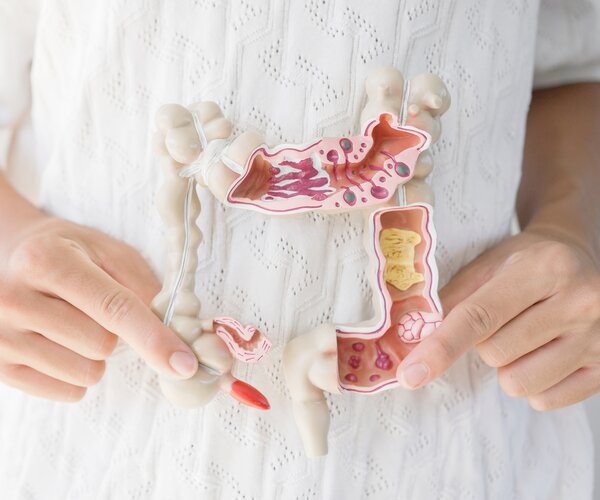
The gut is at the center of this research. Long underestimated, it is now increasingly coming into focus. The human gut is home to a complex ecosystem consisting of billions of microorganisms. This gut microbiome not only influences digestion but also interacts closely with the immune system, metabolism, and the nervous system. Without microorganisms, human life would not be possible—about 90 percent of all cells in and on our bodies are of microbial origin.
No life without microorganisms
Microorganisms perform a wide range of vital functions. They help break down food components, protect against disease-causing germs, and produce metabolic byproducts that are essential for the body. In this way, they contribute to a stable immune system and support digestion. Especially in the gut, they form a finely tuned network that reacts sensitively to external influences—particularly our diet.
The gut-brain axis
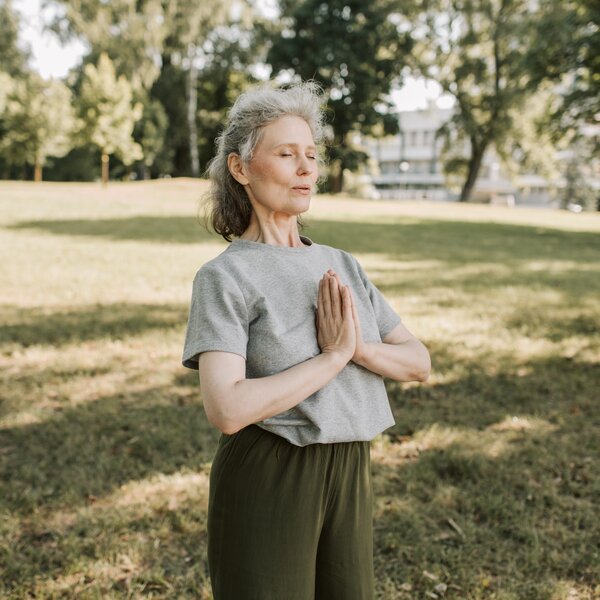
When the gut is healthy, it often has a positive effect on overall well-being. Researchers refer to this as the gut-brain axis. The gut and the brain are in constant communication via nerve pathways and neurotransmitters. This influences mood, stress management, energy balance, and even sleep patterns. It’s no coincidence that the gut is often referred to today as the “second brain.”
Traditional Knowledge from Okinawa
What modern science now confirms has been practiced in Okinawa for generations. The traditional diet is rich in plant-based foods and natural dietary fiber. Green papaya deserves special attention. It has been an integral part of the regional cuisine since the 15th century. In addition to its mild flavor, the digestive enzyme papain it contains is one of the reasons it has traditionally been used in so many different ways. Kelp, a brown seaweed, also plays an important role. It provides minerals and trace elements and has been valued in Okinawa for centuries. Brown rice and rice bran round out the diet and provide a fiber-rich foundation. This combination of selected foods and traditional knowledge formed the basis for Nago’s research.
Fermentation as a bridge
Based on his findings, Nago developed the fermented beverage Manju. His goal was to combine traditional ingredients with modern fermentation processes. He fermented green papaya, rice, rice bran, and kelp using selected microorganisms. This process produces new metabolic byproducts that are specifically designed to support a balanced and gut-healthy diet. Fermentation is a method that has been used for millennia to preserve food and alter its properties. During the fermentation process, ingredients are broken down, new compounds are formed, and natural processes are set in motion. These principles were also central to the development of Manju.
PAC – A significant byproduct
One component of this natural process is the so-called PAC essence, a byproduct produced during fermentation. It contains phytochemicals that are the subject of intensive research in the field of nutritional science. The antioxidants it contains are linked to the body’s natural defense mechanisms and have also been the focus of research into this valuable essence for many years.
Consistency starts in everyday life
Manju is not intended as an isolated measure, but rather as part of a holistic approach. Nutrition should not be viewed in isolation, but as an integral part of a lifestyle centered on balance, variety, and consistency. What matters is not the short-term effect, but the interplay of many factors over a longer period of time. This brings us full circle back to Okinawa. Health and well-being there do not result from isolated interventions, but from the conscious interplay of a balanced diet, inner equilibrium, and a mindful lifestyle. Or to put it another way: consistency begins in everyday life—and often in the gut.
Manju is not intended as an isolated measure, but rather as part of a holistic approach. Nutrition should not be viewed in isolation, but as an integral part of a lifestyle centered on balance, variety, and consistency. What matters is not the short-term effect, but the interplay of many factors over a longer period of time. This brings us full circle back to Okinawa. Health and well-being there do not result from isolated interventions, but from the conscious interplay of a balanced diet, inner equilibrium, and a mindful lifestyle. Or to put it another way: consistency begins in everyday life—and often in the gut.
This may also interest you …

Land creates life: Food waste
Small changes in our daily lives can make a big difference
We’ve all been there: that half-eaten cucumber was forgotten and is now going moldy; the unopened cream cheese has quietly passed its best-by date; and instead of buying just one bell pepper, you bought three because they were on sale. Food waste happens largely at home—and, above all, it creeps up on us. Nevertheless, enormous amounts accumulate in Austria. Yet even small changes in our daily routines can make a big difference in how we handle food.
Beginner
minutes reading time

Multi-knowledge: 8 tips for radiant summer skin
August is the perfect time to enjoy nature to the fullest. Whether you’re hiking, at the lake, in the garden, or on vacation—the sun is a part of many wonderful summer moments. At the same time, your skin is exposed to particular stresses during this season. UV rays, heat, wind, and saltwater or chlorinated water can strain the skin’s natural barrier and strip it of moisture.
With the right skincare, you can help your skin stay healthy, supple, and radiant all summer long. Three factors play a key role here: protection, hydration, and regeneration.
Beginner
7 minutes reading time

Land creates life: Hot topic - Grilling mindfully just tastes better
No summer is complete without a barbecue! A fun get-together, a wide variety of dishes in a relaxed atmosphere—for many, firing up the grill is simply part of the warm season. What we put on the grill should be anything but a trivial matter: When you consciously choose seasonal vegetables and high-quality meat from Austria, you’re not just enjoying a meal—you’re also supporting local agriculture and regional economic growth.
Beginner
8 minutes reading time
