Careers
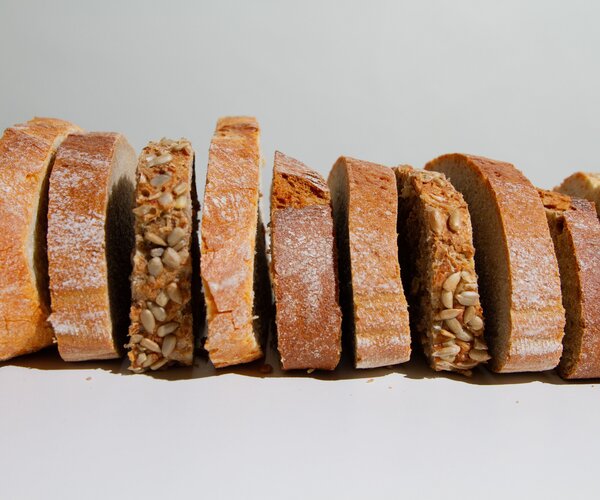
Land creates life: Eat a lot, know a lot? Fact-checking bread
Whether for breakfast, as a side dish at lunch, or as an evening snack—bread is a constant companion throughout our day in Austria. In 2025, average per-capita consumption was estimated at 50.3 kilograms. But does that mean we know a lot about bread? *Land schafft Leben* debunks myths surrounding one of Austria’s favorite foods.
Beginner
6 minutes reading time
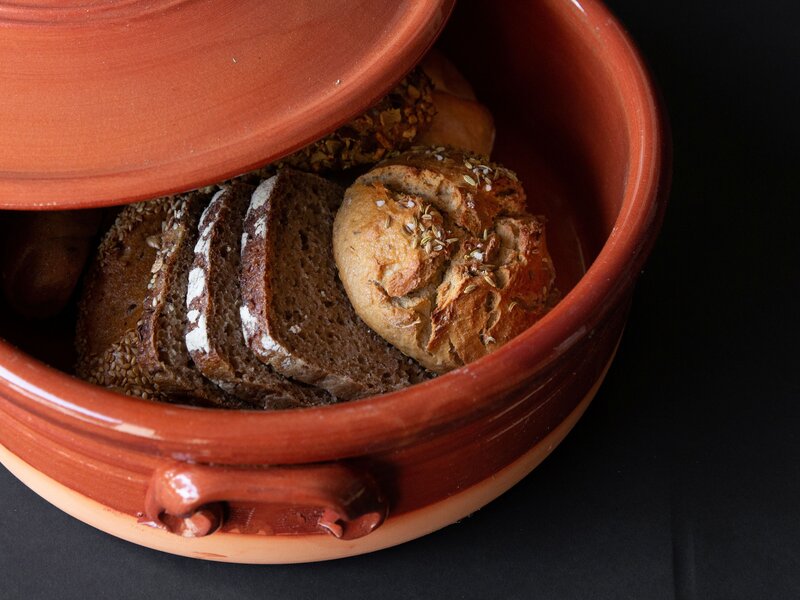
Does a high grain content make bread especially healthy?
The first bread myth we’re tackling is sometimes the deciding factor in our choices at the supermarket: When we want a healthy option, we tend to reach for a dark, whole-grain bread on the shelf. Whether it’s sunflower seeds, pumpkin seeds, or nuts, they definitely provide the body with valuable nutrients. However, they don’t reveal anything about what kind of flour was used in baking. Even a supposedly healthy multigrain bread can consist mainly of white flour. If you want to eat bread that’s particularly rich in nutrients and fiber, though, you should opt for whole-grain bread when shopping. It keeps you feeling full for a long time.
Is it better to store it in the refrigerator or in a plastic bag?
Once you’ve made a conscious decision to choose whole-grain bread, you should also store it properly. However, what works for milk, yogurt, and many other foods isn’t a good idea for bread: While mold is less likely to grow in the cool temperatures of the refrigerator, the bread will go stale faster. The crust loses its crispness, and the inside quickly becomes hard and dry. In very warm, humid weather, it may make sense to freeze bread in portions and thaw it only as needed.
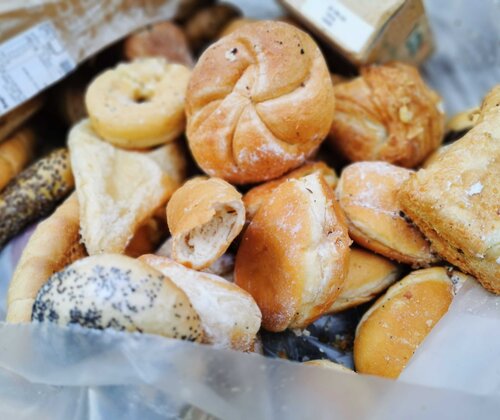
Many people also use plastic bags to store bread. But these aren’t ideal for storage either: the bread starts to sweat, which can promote mold growth. If commercially produced bread is already packaged in plastic, however, it can safely remain in the packaging. For fresh bread, though, you should definitely avoid using plastic bags.
So how else should you store your bread? It’s best to keep fresh baked goods unpackaged in a bread bin or bread box.
Should hard bread go in the trash?
But if you happen to leave your bread out of the bread basket, you don’t have to throw it away right away—even if it’s hard as a rock. In that case, it’s still perfect for using up leftovers. Here are a few ideas for dishes you can make with it: bread dumplings, croutons, bread salad, Scheiterhaufen, French toast… You can even blend it in a food processor and use the breadcrumbs to bread cutlets. It’s important, however, to distinguish between hard bread and spoiled bread: as soon as bread gets moldy, it must be thrown away entirely.
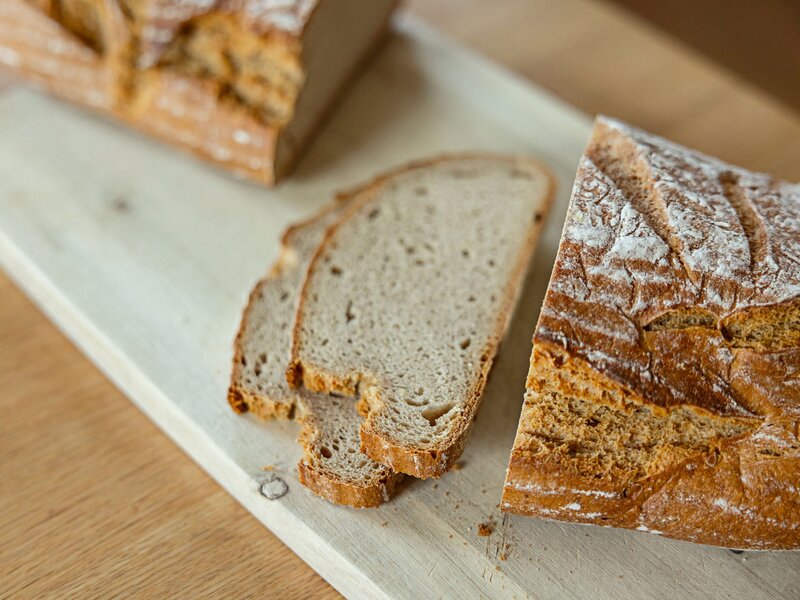
Should I cut out bread to lose weight?
If you want to keep bread from getting hard or stale, you should not only store it properly but also eat it in a timely manner. But doesn’t bread make you fat, as the saying goes? This myth persists, especially in connection with low-carb diets, even though the carbohydrates in bread provide us with important energy for our daily lives. Whether we gain or lose weight in the long term doesn’t depend on a single food, but primarily on how much energy we consume and burn overall. This also means that eating a lot of bread—or piling on many slices of cheese—can contribute to weight gain. Your personal energy needs depend, among other things, on your age, body weight, body composition, and physical activity. So bread certainly doesn’t have to be eliminated from your diet altogether.
Whether you’re shopping, storing, or enjoying food—not just bread, but all foods—you should take a closer look and question so-called “facts.” After all, often all it takes is a little knowledge to enjoy food more mindfully.
Land creates life: Exploring Austrian Foods
For years, Multikraft has been a sponsor of the organization Land schafft Leben, which raises awareness of the value of Austrian food—for producers, habitats and the environment, health, and for all of us. From the field and barn to the plate, across the entire value chain, researched transparently and independently—Land schafft Leben is the knowledge platform for Austrian food. The founding duo, Maria Fanninger and Hannes Royer, provide realistic insights, free from sensationalism and whitewashing: through podcasts, on social media, in newsletters, at lectures, and in interviews. The scientifically grounded content, presented in text, image, and video formats, is freely available at www.landschafftleben.at.
This may also interest you …
Manju
Multikosmos: A center for well-being—When your gut has a say
On Okinawa, an island in southern Japan, diet has played a special role for centuries. It is no coincidence that Okinawa is known as one of the regions where people live to a particularly advanced age. The traditional cuisine is considered simple, natural, and rich in fiber. Vegetables, seaweed, brown rice, and fermented foods are staples of the diet. Here, health and well-being are not viewed as short-term goals, but rather as the result of a lifestyle centered on balance and consistency.
Enthusiast
minutes reading time
Land creates life: Food waste
Small changes in our daily lives can make a big difference
We’ve all been there: that half-eaten cucumber was forgotten and is now going moldy; the unopened cream cheese has quietly passed its best-by date; and instead of buying just one bell pepper, you bought three because they were on sale. Food waste happens largely at home—and, above all, it creeps up on us. Nevertheless, enormous amounts accumulate in Austria. Yet even small changes in our daily routines can make a big difference in how we handle food.
Beginner
minutes reading time

Multi-knowledge: 8 tips for radiant summer skin
August is the perfect time to enjoy nature to the fullest. Whether you’re hiking, at the lake, in the garden, or on vacation—the sun is a part of many wonderful summer moments. At the same time, your skin is exposed to particular stresses during this season. UV rays, heat, wind, and saltwater or chlorinated water can strain the skin’s natural barrier and strip it of moisture.
With the right skincare, you can help your skin stay healthy, supple, and radiant all summer long. Three factors play a key role here: protection, hydration, and regeneration.
Beginner
7 minutes reading time
