Careers
Multikosmos: PFAS in Cosmetics—Longevity with a Risk
There is a vast variety of skin care and cosmetic products available. No matter what the problem, the market offers a solution to pamper yourself and your skin. For dry skin, you apply moisturizer diligently; for dandruff, there’s the right shampoo; and for wrinkles, there are numerous formulations designed to make your skin glow. But even products intended for good can often—even expensive ones—contain questionable ingredients. We’re talking about PFAS, the so-called “forever chemicals.” They’re frequently used in cosmetics and other products because of their durability, but they’re facing increasing criticism due to their impact on people and the environment. This article explains what they are, how they work, why they can be harmful, and why natural cosmetics offer a genuine alternative.
Beginner
8 minutes reading time
The pitfalls of shelf life
Whether it’s creams, shampoos, or makeup—rarely does a day go by without using personal care products. However, what is intended as a good thing for the skin can, unnoticed, introduce harmful substances into the body and, subsequently, into the environment. These substances include, among others, PFAS, short for per- and polyfluoroalkyl substances. PFAS are frequently used to make products waterproof, grease-resistant, and particularly durable. However, their longevity in cosmetics isn’t the reason they’re called “forever chemicals.” Rather, it’s because they degrade very slowly—they can remain in the environment for up to 70 years. But PFAS are not only found in cosmetics; they are also present in numerous everyday products. These include, among others, certain pesticides, water- and stain-repellent textiles such as outdoor and functional clothing, and other industrially treated materials.
Whether it’s creams, shampoos, or makeup—rarely does a day go by without using personal care products. However, what is intended as a good thing for the skin can, unnoticed, introduce harmful substances into the body and, subsequently, into the environment. These substances include, among others, PFAS, short for per- and polyfluoroalkyl substances. PFAS are frequently used to make products waterproof, grease-resistant, and particularly durable. However, their longevity in cosmetics isn’t the reason they’re called “forever chemicals.” Rather, it’s because they degrade very slowly—they can remain in the environment for up to 70 years. But PFAS are not only found in cosmetics; they are also present in numerous everyday products. These include, among others, certain pesticides, water- and stain-repellent textiles such as outdoor and functional clothing, and other industrially treated materials.
Practical, but not without its risks
Even though PFAS may seem useful in some applications, the risks clearly outweigh the benefits. The human body is primarily exposed to PFAS through food and consumer products. Because they are not biodegradable, they accumulate in the environment, in animals, and in humans. Studies show that certain PFAS can damage the liver, disrupt hormonal balance and the immune system, interfere with fat metabolism, or promote cancer. Since there is currently no mandatory labeling requirement for PFAS, it is nearly impossible for consumers to tell which products actually contain them.

Natural cosmetics as a gentle alternative
The answer to how to reduce PFAS exposure through cosmetics: certified natural cosmetics. They offer a natural alternative to conventional, often non-transparent skincare products—completely free of “forever chemicals.” Natural cosmetic products demonstrate that effective personal care doesn’t have to come at the expense of the environment or health. They are subject to clear regulations and standards, such as the requirement that all ingredients must be derived from natural raw materials of plant, animal, or mineral origin. However, it is not enough for only the starting material to be a natural raw material; the subsequent processing steps are also strictly regulated: natural substances may only be processed using physical, microbiological, or enzymatic methods, making the process particularly gentle. Natural cosmetics, however, are not the same as organic cosmetics, as the latter must meet even stricter requirements.
Identifying and avoiding PFAS
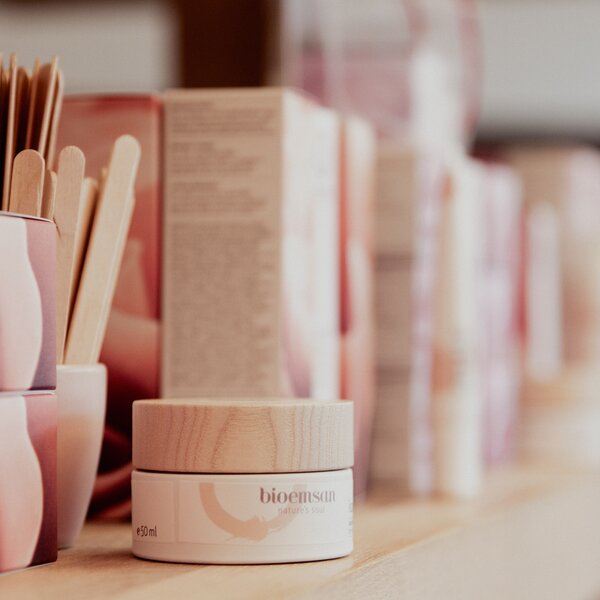
Persistent chemicals are not always easy or obvious to identify in products. However, there are a few characteristics that can serve as a guide: For example, products labeled as waterproof or smudge-proof usually contain PFAS, so it’s best to avoid them whenever possible. There are also numerous recognized seals of approval for natural cosmetics that can serve as a guide for consumers—for example, the Austria Bio Garantie. All products in the bioemsan organic cosmetics line carry this seal. Austria Bio Garantie is the domestic market leader for inspections and certifications of organic products along the entire value chain in Austria. To ensure compliance with applicable standards, facilities are regularly inspected on-site and all relevant documentation is carefully reviewed. Only when all requirements are met does a facility receive the Austria Bio Garantie certificate.
Apps or carefully reading product packaging can help with a quick ingredient check. This makes it easy to identify which products are truly good for your body and the environment. In addition, the body can support its natural detoxification process through exercise, sweating, or a high-fiber diet. The key, however, is to avoid PFAS as much as possible—both in cosmetics and in everyday life.
Persistent chemicals are not always easy or obvious to identify in products. However, there are a few characteristics that can serve as a guide: For example, products labeled as waterproof or smudge-proof usually contain PFAS, so it’s best to avoid them whenever possible. There are also numerous recognized seals of approval for natural cosmetics that can serve as a guide for consumers—for example, the Austria Bio Garantie. All products in the bioemsan organic cosmetics line carry this seal. Austria Bio Garantie is the domestic market leader for inspections and certifications of organic products along the entire value chain in Austria. To ensure compliance with applicable standards, facilities are regularly inspected on-site and all relevant documentation is carefully reviewed. Only when all requirements are met does a facility receive the Austria Bio Garantie certificate.
Apps or carefully reading product packaging can help with a quick ingredient check. This makes it easy to identify which products are truly good for your body and the environment. In addition, the body can support its natural detoxification process through exercise, sweating, or a high-fiber diet. The key, however, is to avoid PFAS as much as possible—both in cosmetics and in everyday life.
The key to a natural future
PFAS may seem functional and practical—but that comes at a price: they pose long-term risks to humans, animals, and the environment. Switching to certified organic cosmetics, on the other hand, makes a contribution—perhaps small, but valuable—toward a more sustainable and healthier future. The bioemsan organic cosmetics line has, of course, always been PFAS-free—whether in shampoo, conditioner, day cream, or toothpaste. Its products rely on the effective and natural action of microorganisms. This makes them not only particularly effective but also truly exceptional—and you can really feel the difference. bioemsan products have antioxidant, cell-regenerating, and anti-inflammatory effects. As a result, the skin, hair, and body retain their natural protective barrier. This is important because the skin is colonized by trillions of microorganisms that together form the skin microbiome. Their interaction plays a central protective role for our largest organ. When the microbiome is supported by beneficial microorganisms, this natural protective barrier can be strengthened and help keep the skin resilient against external influences.
Old traditions combined with new knowledge
The targeted use of microorganisms and fermentation processes is part of many traditional cultures around the world. Modern natural cosmetics draw on this knowledge and combine it with the latest findings from skin microbiome research. The result is a line of probiotic cosmetic products inspired by natural cycles and processes found in nature. Thanks to ongoing development and the use of exclusively organic raw materials, these products are a treat for the skin and promote well-being.
Sustainability doesn’t require chemicals that last forever—it requires solutions that protect and respect both the skin and the environment in the long term.
The targeted use of microorganisms and fermentation processes is part of many traditional cultures around the world. Modern natural cosmetics draw on this knowledge and combine it with the latest findings from skin microbiome research. The result is a line of probiotic cosmetic products inspired by natural cycles and processes found in nature. Thanks to ongoing development and the use of exclusively organic raw materials, these products are a treat for the skin and promote well-being.
Sustainability doesn’t require chemicals that last forever—it requires solutions that protect and respect both the skin and the environment in the long term.
This may also interest you …

Land creates life: Refreshments with your meal - How to keep your cool even in the summer
Summer is here! And with it comes the heat. Light, airy clothing, swimming, air conditioning, ice cubes… there are many ways to make the high temperatures at least a little more bearable. Certain foods can also help. The organization Land schafft Leben explains how we can stay cool with food.
Beginner
5 minutes reading time

Land creates life: Get fit for spring with seasonal vegetables
Fresh cucumbers in March, broccoli in May—it sounds convenient, but it comes at a cost. With the start of the spring harvest, it’s worth taking a closer look at the vegetables in our shopping carts: By choosing seasonal and locally grown produce now, we not only help protect the climate but also provide our bodies with fresh, valuable nutrients while supporting local agriculture.
Beginner
5 minutes reading time

Land creates life: Energy - How to Make the Most of Your Day
Our performance levels fluctuate, and there are many reasons for this: our physical health, sleep, diet, age, and individual predispositions, among other factors, influence our daily performance curve. The organization Land schafft Leben shows how we can positively influence our performance to really get off to a good start.
Beginner
7 minutes reading time
