Careers
Multikosmos: A family business in transition
Strength Lies in Experience
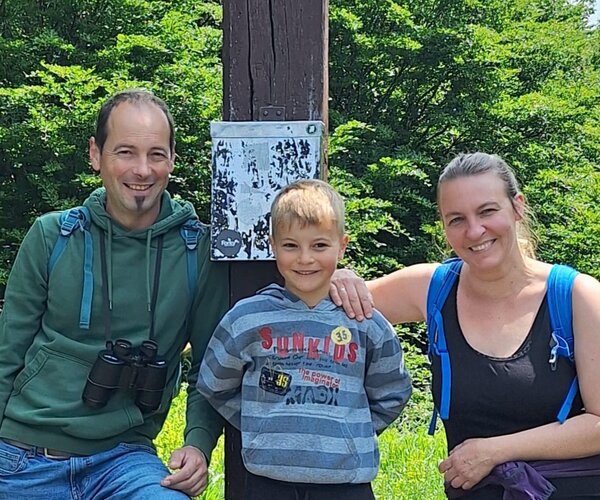
The Weiermair family farm is located in the idyllic town of Adlwang in Upper Austria and is currently home to about 320 pigs. Johannes Weiermair took over his parents’ organic farm in 2011 and has initiated several changes since then. The former mixed-farming operation has been exclusively dedicated to organic pig farming since 2020. As is so often the case in life, such a transition is always accompanied by ups and downs. In this interview, the passionate organic farmer discusses the challenges the family faced and how he continues to tackle them today using common sense.
Enthusiast
8 minutes reading time
Johannes Weiermair runs the family farm with heart and soul. Back in 2011, he took over the farm—founded by his grandmother—from his parents, Hermine and Karl Weiermair. “The transition actually went smoothly; it wasn’t until we started making changes to the farm that things got a bit more turbulent,” he recalls. Shortly after the war, his grandmother took over the farm. Cows and pigs called this place home for decades. Later, she handed the farm over to her son, who, together with his wife, continued to run it as a mixed farm with suckler cows and pig fattening on about 16 hectares. Johannes Weiermair regularly helped out on the farm as a child and young adult. When his parents retired, the farm was finally passed on to him. The transition marked the beginning of a new phase.
Johannes Weiermair runs the family farm with heart and soul. Back in 2011, he took over the farm—founded by his grandmother—from his parents, Hermine and Karl Weiermair. “The transition actually went smoothly; it wasn’t until we started making changes to the farm that things got a bit more turbulent,” he recalls. Shortly after the war, his grandmother took over the farm. Cows and pigs called this place home for decades. Later, she handed the farm over to her son, who, together with his wife, continued to run it as a mixed farm with suckler cows and pig fattening on about 16 hectares. Johannes Weiermair regularly helped out on the farm as a child and young adult. When his parents retired, the farm was finally passed on to him. The transition marked the beginning of a new phase.
Major changes: from 50 to 320 pigs
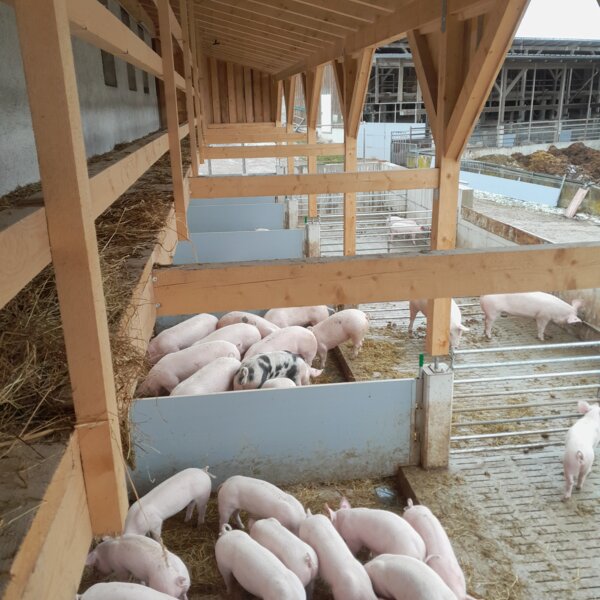
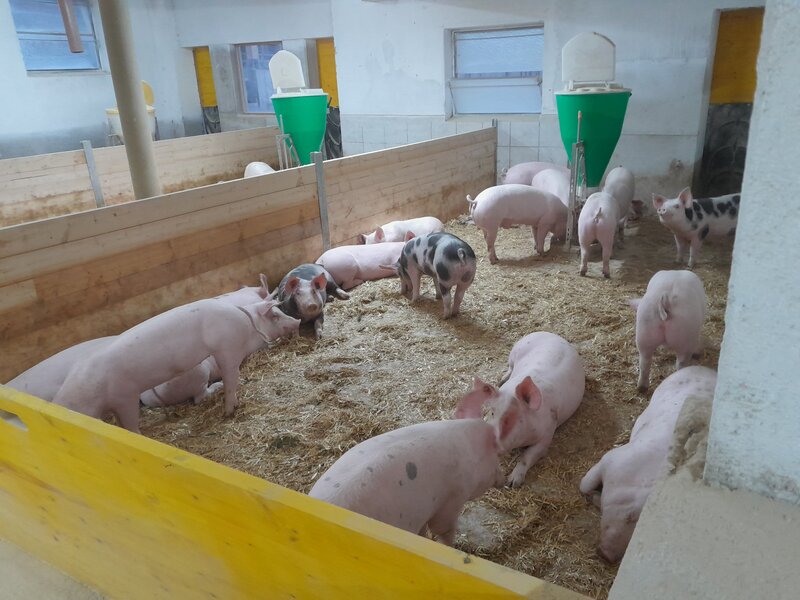
The changes on the farm were primarily an economic decision, but also a personal one: On the one hand, raising cattle wasn’t particularly profitable back then, Weiermair explains; on the other hand, he recalls fondly: “We just get along better with pigs—my wife didn’t really warm up to the cows back then either. That was also a catalyst for us, as a family business, to rethink things. After all, we should all enjoy our work.” So the decision was finally made to switch entirely to pig fattening. Of course, that doesn’t happen overnight, so he made all sorts of upgrades to the farm—in 2017, he built a new barn with 170 spaces for the animals. In 2020, he sold the last remaining cows and expanded capacity to 260 spaces for his pigs. Last year, he took another big step by renovating the existing barn on the property. As a result, the farm now has space for 320 animals. In addition to pig farming, the family also grows potatoes, and 70 chickens produce eggs for direct sales—even his son’s five rabbits have found a home on the farm, which now spans about 28 hectares. “We’re a traditional family farm; we try to make use of everything the farm has to offer and that feels right,” says Johannes Weiermair.
More pigs caused a stronger odor problem
The Weiermair family felt comfortable with their decision to switch to pig farming from the very beginning—but as they increased the number of pigs on their farm in 2017, they noticed that the odor nuisance had increased significantly when spreading manure or slurry. This was an unpleasant situation not only for the family but also for the surrounding neighborhood. As a result, the organic farmer sought a natural solution to address the problem. Following a recommendation, he scheduled a personal consultation with a Multikraft specialist to get the odor under control. Following the in-depth consultation, he began adding Fermented Herb Extract (FHE) to the pigs’ feed. And it worked—in addition to the benefits he had been told about, his main problem was solved: the strong odor of manure. “When you come to our farm today, you just don’t smell as much. And my common sense tells me: if you smell less, we probably also have fewer nutrient losses,” says Weiermair, speaking from his own experience. He has been using FHE for more than five years now, even after cleaning the barn, before putting his pigs back in. “Our reasoning behind this is that there will always be bacteria in the barn because we don’t disinfect after cleaning, but if we coat the barn with beneficial microorganisms, there’s less room for harmful bacteria,” he explains. His positive experiences are the reason he’s stuck with it.
The Weiermair family felt comfortable with their decision to switch to pig farming from the very beginning—but as they increased the number of pigs on their farm in 2017, they noticed that the odor nuisance had increased significantly when spreading manure or slurry. This was an unpleasant situation not only for the family but also for the surrounding neighborhood. As a result, the organic farmer sought a natural solution to address the problem. Following a recommendation, he scheduled a personal consultation with a Multikraft specialist to get the odor under control. Following the in-depth consultation, he began adding Fermented Herb Extract (FHE) to the pigs’ feed. And it worked—in addition to the benefits he had been told about, his main problem was solved: the strong odor of manure. “When you come to our farm today, you just don’t smell as much. And my common sense tells me: if you smell less, we probably also have fewer nutrient losses,” says Weiermair, speaking from his own experience. He has been using FHE for more than five years now, even after cleaning the barn, before putting his pigs back in. “Our reasoning behind this is that there will always be bacteria in the barn because we don’t disinfect after cleaning, but if we coat the barn with beneficial microorganisms, there’s less room for harmful bacteria,” he explains. His positive experiences are the reason he’s stuck with it.
Fortunately, the organic farmer generally doesn’t have many problems with his pigs. “We’ve been using FHE for so long that we don’t have any major problems—it’s just part of our daily routine,” he explains. Johannes Weiermair took notice of a study by the companies Hüttaler and Multikraft that examined the effects of FHE on tail-biting. Although he hadn’t experienced any problems with it himself, the results pleasantly surprised him and further reinforced his decision to use it. “Of course, every now and then I waver about whether I can afford the FHE right now, but then I realize again that there’s a good reason behind it. And a reduction in tail-biting from 71 to 5 percent is no small thing. So you’re also buying yourself some peace of mind; unrest in the barn costs money, too,” he explains.
“If my gut tells me it's right, then it's right.”
Economic efficiency plays a central role in agriculture—and this is also true for Johannes Weiermair when it comes to making decisions for his farm. At the same time, he relies on years of observation and practical experience. When it comes to using FHE, he is convinced that it has a positive effect on nutrient loss during the application of liquid manure and solid manure. “I can’t prove it, but my gut tells me it’s true,” explains the pig farmer. “And ultimately, it’s also a matter of logic: I expect a return on my use and investment—otherwise, I wouldn’t have been using it for so many years.” Weiermair takes a similar approach to the use of biochar, which he adds to the manure as a supplement. Here, too, he relies on his experiences from day-to-day farm operations and the effects he has observed. For him, the same approach applies as with FHE: “If my gut feeling tells me it works when I use it, then it works.”
Economic efficiency plays a central role in agriculture—and this is also true for Johannes Weiermair when it comes to making decisions for his farm. At the same time, he relies on years of observation and practical experience. When it comes to using FHE, he is convinced that it has a positive effect on nutrient loss during the application of liquid manure and solid manure. “I can’t prove it, but my gut tells me it’s true,” explains the pig farmer. “And ultimately, it’s also a matter of logic: I expect a return on my use and investment—otherwise, I wouldn’t have been using it for so many years.” Weiermair takes a similar approach to the use of biochar, which he adds to the manure as a supplement. Here, too, he relies on his experiences from day-to-day farm operations and the effects he has observed. For him, the same approach applies as with FHE: “If my gut feeling tells me it works when I use it, then it works.”
Application Tip from a Pro
Johannes Weiermair came up with a practical solution for mixing the FHE into the feed—after all, the amount of work involved should be kept to a minimum. Using a canister with a drain valve and a simple bypass on the mixer, he automatically dispenses the product directly into the feed stream. And it’s worth it: “This way, I didn’t have to invest in any extra equipment. The only effort involved is the relatively small amount of work required to lower the FHE into the container and then add it,” says Weiermair. Although he also sprays the FHE during mucking out, he’s certain that administering it through the feed offers a dual benefit: “This way, the FHE is not only inside the animal itself but also everywhere else, because it’s automatically distributed through urine and feces. And if the FHE has a positive effect on the gut, on the pigs’ behavior, and also in the barn, then that’s actually the ideal approach for me,” says the farmer. For Johannes Weiermair, it is precisely this synergy that is crucial—an approach that has proven itself in day-to-day farm operations and represents the optimal solution for him.
Thank you very much for the interview.
Johannes Weiermair came up with a practical solution for mixing the FHE into the feed—after all, the amount of work involved should be kept to a minimum. Using a canister with a drain valve and a simple bypass on the mixer, he automatically dispenses the product directly into the feed stream. And it’s worth it: “This way, I didn’t have to invest in any extra equipment. The only effort involved is the relatively small amount of work required to lower the FHE into the container and then add it,” says Weiermair. Although he also sprays the FHE during mucking out, he’s certain that administering it through the feed offers a dual benefit: “This way, the FHE is not only inside the animal itself but also everywhere else, because it’s automatically distributed through urine and feces. And if the FHE has a positive effect on the gut, on the pigs’ behavior, and also in the barn, then that’s actually the ideal approach for me,” says the farmer. For Johannes Weiermair, it is precisely this synergy that is crucial—an approach that has proven itself in day-to-day farm operations and represents the optimal solution for him.
Thank you very much for the interview.
This may also interest you …
livestock farming
Multikosmos: Efficiency over growth
A New Perspective on the Future of Agriculture - A Conversation with Prof. Dr. Wilhelm Windisch
The idea that progress is inevitably synonymous with growth is deeply ingrained in many people’s minds. However, in the face of an agricultural sector grappling with increasingly scarce resources, mounting climate pressures, and ecological limits, a new way of thinking is gaining ground: farming in harmony with nature.
Enthusiast
10 minutes reading time
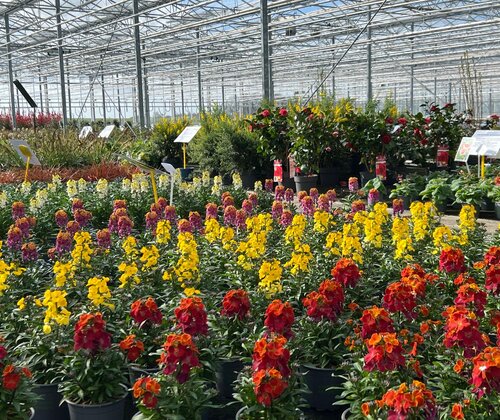
Between garden plants and balcony boxes: How Huyskweker Stouten relies on the Multikraft system
Arjen Stouten runs Huyskweker Stouten V.O.F. in Oosterland, the Netherlands, together with his family. On approximately 1 hectare of greenhouse space, the family-run business professionally cultivates high-quality summer flowers, as well as a wide assortment of bedding and balcony plants and various perennials. A particular focus is on balcony and patio planters, as well as hanging baskets with built-in water reservoirs. The company sells directly to private end customers throughout the Netherlands and a small part of Belgium.
Enthusiast
5 minutes reading time
livestock farming
Land Creates Life: Greater Transparency When Buying Honey
New Rules of Origin Effective June 2026
How can you tell if honey is truly from Austria? With regional specialties, organic products, and inexpensive imported blends on the shelves, it’s often not easy for Austrian honey to stand out in the supermarket. While checking the label helps, many origin labels have been rather vague up until now. That’s exactly what the new 2026 amendment to the Honey Regulation is set to change.
Beginner
6 minutes reading time
