Careers
Multikosmos: Efficiency over growth
A New Perspective on the Future of Agriculture - A Conversation with Prof. Dr. Wilhelm Windisch
The idea that progress is inevitably synonymous with growth is deeply ingrained in many people’s minds. However, in the face of an agricultural sector grappling with increasingly scarce resources, mounting climate pressures, and ecological limits, a new way of thinking is gaining ground: farming in harmony with nature.
Enthusiast
10 minutes reading time
In our conversation, Prof. Dr. Wilhelm Windisch, an agricultural scientist and professor of animal nutrition, explains why sustainability does not come from growth, but rather from a mindful approach to resources and natural cycles. “We don’t need to grow; we need to become more efficient,” he asserts. His perspective offers a humane, hopeful vision of the agriculture of tomorrow—one in which we need to take less in order to gain more in the long run.
In our conversation, Prof. Dr. Wilhelm Windisch, an agricultural scientist and professor of animal nutrition, explains why sustainability does not come from growth, but rather from a mindful approach to resources and natural cycles. “We don’t need to grow; we need to become more efficient,” he asserts. His perspective offers a humane, hopeful vision of the agriculture of tomorrow—one in which we need to take less in order to gain more in the long run.
Dear Mr. Windisch, what does sustainability in agriculture mean to you?
There are three ways of looking at sustainability: For the population that depends on agricultural products for its livelihood, this means that the food supply never runs out. They don’t have to worry about whether their food will still be on the shelves tomorrow. For farmers, sustainability is not a goal in and of itself; rather, they depend on it for their livelihood. Sustainability is the fundamental prerequisite for, say, building a new barn or choosing a crop rotation. Every investment has an impact on the coming decades. The third aspect is the sustainability of resources. From a human perspective, resources are theoretically infinite. But we must ensure that this remains the case and that, for example, fertile soils are preserved. For true sustainability, all three perspectives must be in harmony.
There are three ways of looking at sustainability: For the population that depends on agricultural products for its livelihood, this means that the food supply never runs out. They don’t have to worry about whether their food will still be on the shelves tomorrow. For farmers, sustainability is not a goal in and of itself; rather, they depend on it for their livelihood. Sustainability is the fundamental prerequisite for, say, building a new barn or choosing a crop rotation. Every investment has an impact on the coming decades. The third aspect is the sustainability of resources. From a human perspective, resources are theoretically infinite. But we must ensure that this remains the case and that, for example, fertile soils are preserved. For true sustainability, all three perspectives must be in harmony.
Is this harmony under threat?
Not under threat, but not a given either. It takes forever for a piece of land to become fertile. For example, if we have too few cattle and thus too little grazing pressure on the alpine pastures, they will become overgrown with trees unless we use machinery to help clear them. We can’t simply clear these areas when needed and put them back into use right away. These are processes that take decades. Climate change, too, is essentially robbing us of our resources in this way. The Sahara is expanding enormously, while at the same time the permafrost in Siberia is thawing and areas are being exposed. But these aren’t arable lands. If arable land were merely shifting, we wouldn’t have such a big problem. The problem is that we’re losing arable land entirely—and that’s causing instability on a global scale. The Sahara and Siberia may be far away, but the new climate conditions are causing new pests, for example, to spread here as well. And that’s a disaster for local agriculture.
Not under threat, but not a given either. It takes forever for a piece of land to become fertile. For example, if we have too few cattle and thus too little grazing pressure on the alpine pastures, they will become overgrown with trees unless we use machinery to help clear them. We can’t simply clear these areas when needed and put them back into use right away. These are processes that take decades. Climate change, too, is essentially robbing us of our resources in this way. The Sahara is expanding enormously, while at the same time the permafrost in Siberia is thawing and areas are being exposed. But these aren’t arable lands. If arable land were merely shifting, we wouldn’t have such a big problem. The problem is that we’re losing arable land entirely—and that’s causing instability on a global scale. The Sahara and Siberia may be far away, but the new climate conditions are causing new pests, for example, to spread here as well. And that’s a disaster for local agriculture.
So what about the sustainability of our agriculture?
Across crop rotations, we’ve seen rising harvests in absolute terms. But the yield per hectare has remained stagnant for the past 15 to 20 years. So we have a consistent yield despite significant advances in breeding. Why? — Because environmental factors such as persistent heavy rain cause quality losses and negate this progress. Our current system is like an escalator going down. To stay at the same level, we have to run uphill faster and faster the faster it goes down. This is not sustainable and leads to exhaustion and collapse. We’re usually used to disasters sweeping across the land, and when they subside, we rebuild. That’s not the case with climate change. Countless future generations will pay the price for our actions. To turn things around, there is only one solution—but it is so radical that no one wants to implement it: a true circular economy.
What does a true circular economy mean?
You can think of a true circular economy this way: We’re on a sailboat and can never head for port again. Everything we throw away is irretrievably lost—which is why we must choose and use resources in such a way that they can be reused or recycled in a continuous cycle. The goal is to take only what is absolutely necessary, avoid waste, and achieve maximum efficiency. This includes energy as well. Fossil fuels also produce waste in the form of CO2, which we “dump” into the atmosphere - which is why we should rely solely on solar and wind power. In contrast, however, we currently live as if we could always obtain new resources “at the next port” - which contradicts the idea of a true circular economy.
Where could we start on a small scale?
Plant-based food always produces non-edible biomass as well. We need to ask ourselves: What do we do with it? It’s valuable material—we just can’t eat it ourselves. When we look at the potential uses of the entire plant, we see a cascade of uses: from the plate to the trough to the tank. The primary use is always the direct route to the human plate—that is, the consumption of plant-based food. The secondary use is its transformation, for example, into livestock feed, which in turn produces food. Only at the end of the biomass utilization chain does its use for energy production come into play.
In short: The fact is, we have biomass that doesn’t end up on our plates, and livestock are the next-best option for efficiently utilizing it.
If we look at how we manage livestock: how can we make this process “more efficient”?
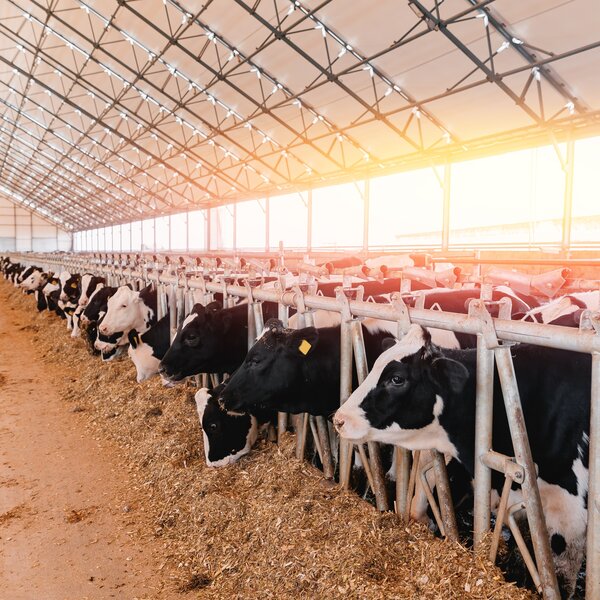
The most significant factors are animal health and animal welfare. We have to admit: our animals don’t live as long as they could. Let’s look at the causes of culling: mastitis, hoof problems, and ruminal acidosis. The reason is usually an excessively high proportion of concentrate feed. This is due to the milk yield they’re expected to produce. That doesn’t mean a cow that produces 12,000 liters of milk is bad, but she can’t eat twice as much as one that produces 7,000. That’s why they’re fed concentrate. But the cow also has to be healthy so she can physically handle that workload. The crux of the matter is that a high proportion of concentrate means a low proportion of fiber—which is what their digestive tract is “built” for. This causes problems in the forestomachs, which in turn lead to the aforementioned causes of culling. Hay-milk farmers, for example, do things differently: they severely limit the proportion of concentrated feed but feed high-quality hay that is so rich in fiber, nutrients, and protein that it could almost pass as half concentrated feed. The result: the cows have fewer illnesses, live longer, and fewer replacement animals are needed. The system suddenly becomes more efficient.
Plant-based food always produces non-edible biomass as well. We need to ask ourselves: What do we do with it? It’s valuable material—we just can’t eat it ourselves. When we look at the potential uses of the entire plant, we see a cascade of uses: from the plate to the trough to the tank. The primary use is always the direct route to the human plate—that is, the consumption of plant-based food. The secondary use is its transformation, for example, into livestock feed, which in turn produces food. Only at the end of the biomass utilization chain does its use for energy production come into play.
In short: The fact is, we have biomass that doesn’t end up on our plates, and livestock are the next-best option for efficiently utilizing it.
If we look at how we manage livestock: how can we make this process “more efficient”?
The most significant factors are animal health and animal welfare. We have to admit: our animals don’t live as long as they could. Let’s look at the causes of culling: mastitis, hoof problems, and ruminal acidosis. The reason is usually an excessively high proportion of concentrate feed. This is due to the milk yield they’re expected to produce. That doesn’t mean a cow that produces 12,000 liters of milk is bad, but she can’t eat twice as much as one that produces 7,000. That’s why they’re fed concentrate. But the cow also has to be healthy so she can physically handle that workload. The crux of the matter is that a high proportion of concentrate means a low proportion of fiber—which is what their digestive tract is “built” for. This causes problems in the forestomachs, which in turn lead to the aforementioned causes of culling. Hay-milk farmers, for example, do things differently: they severely limit the proportion of concentrated feed but feed high-quality hay that is so rich in fiber, nutrients, and protein that it could almost pass as half concentrated feed. The result: the cows have fewer illnesses, live longer, and fewer replacement animals are needed. The system suddenly becomes more efficient.
Can we say that farmers simply need to feed less concentrated feed in order to become more efficient?
Not necessarily, but they would need to tailor the feeding regimen specifically. Concentrates aren’t inherently bad—they provide important nutrients that are often lacking in roughage, particularly essential amino acids. The key is the balance: Only when the animals receive exactly what their metabolism needs will they remain healthy and utilize nutrients efficiently. An unbalanced diet, on the other hand, leads to increased nitrogen emissions and reduces efficiency. So focusing solely on increasing milk production rather than on animal health is problematic. This means we shouldn’t simply feed the animals more, but rather give them more of what they actually need. Although supplemental amino acids have a relatively high carbon footprint in industrial production, they have a significant effect even in small quantities. As a result, they make the system more efficient overall. Today, however, most can be produced biologically through microorganisms; only methionine is produced chemically. Through targeted supplementation, feed intake can thus be reduced while maintaining the same level of performance. Quality over quantity is therefore the key.
In this context, when we look at the soil, how do we ensure that it remains healthy and productive?
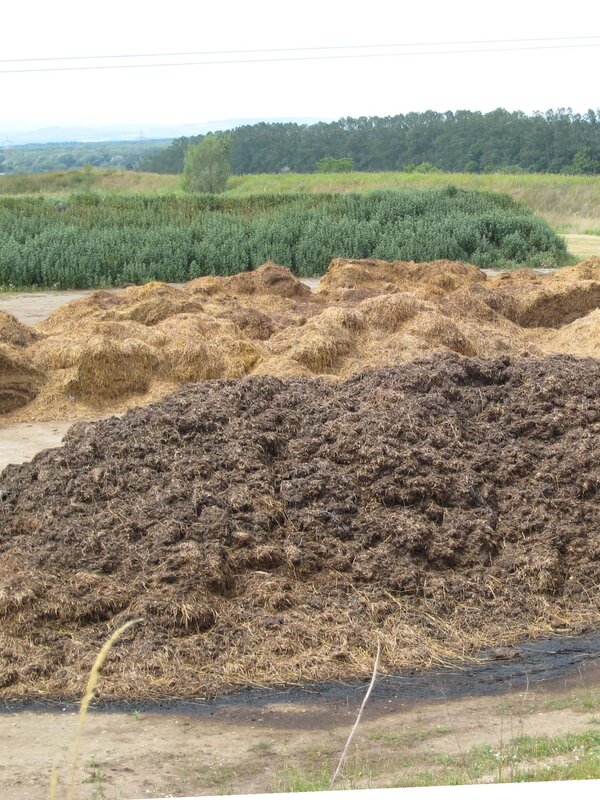
Above all, healthy soil needs protection from compaction and erosion, as well as greater resilience to drought, heat, and flooding. Key factors include permanently covered areas, diverse crop rotations, and cover crops that cool the soil, store water, and promote biodiversity—which also helps manage nitrogen accumulation. While yields may decline over the course of the crop rotation, the soil remains more fertile and more reliable in terms of yield in the long term. Livestock play an important but often misunderstood role in this cycle. The view that they are needed solely for fertilizing fields is too narrow. The non-edible biomass contains nutrients that must be returned to the fields. We have three options for this: we can let the biomass decompose, send it to a biogas plant and spread the digestate, or feed it to livestock and apply the manure. The fertilizing effect is most efficient when it aligns with the plant growth cycle. This means we need manure that can be stored. Biogas plants provide energy, while livestock also provide food—both produce valuable fertilizer. In this respect, both sources are equally valuable. But there is a difference in output: in a biogas plant, we generate electricity, while livestock provide additional food. Feeding the biomass to livestock is therefore more efficient. Currently, we use about 40% of arable land worldwide, just under 60% in Germany, and about 50% in Austria for growing animal feed. We essentially feed half of every kilogram of bread to livestock. It would be more efficient to produce only as much milk and meat as that one kilogram of bread yields in non-edible biomass. This would automatically result in a balanced mix of plant-based and animal-based foods—tailored to local conditions and soil types.
Above all, healthy soil needs protection from compaction and erosion, as well as greater resilience to drought, heat, and flooding. Key factors include permanently covered areas, diverse crop rotations, and cover crops that cool the soil, store water, and promote biodiversity—which also helps manage nitrogen accumulation. While yields may decline over the course of the crop rotation, the soil remains more fertile and more reliable in terms of yield in the long term. Livestock play an important but often misunderstood role in this cycle. The view that they are needed solely for fertilizing fields is too narrow. The non-edible biomass contains nutrients that must be returned to the fields. We have three options for this: we can let the biomass decompose, send it to a biogas plant and spread the digestate, or feed it to livestock and apply the manure. The fertilizing effect is most efficient when it aligns with the plant growth cycle. This means we need manure that can be stored. Biogas plants provide energy, while livestock also provide food—both produce valuable fertilizer. In this respect, both sources are equally valuable. But there is a difference in output: in a biogas plant, we generate electricity, while livestock provide additional food. Feeding the biomass to livestock is therefore more efficient. Currently, we use about 40% of arable land worldwide, just under 60% in Germany, and about 50% in Austria for growing animal feed. We essentially feed half of every kilogram of bread to livestock. It would be more efficient to produce only as much milk and meat as that one kilogram of bread yields in non-edible biomass. This would automatically result in a balanced mix of plant-based and animal-based foods—tailored to local conditions and soil types.
So the health of our soils and livestock is closely linked to their productivity?
Yes, we’ve internalized a misguided notion of efficiency. Take our cars, for example: they’re becoming more and more efficient - yet at the same time, they’re getting heavier and larger. This means they’re only theoretically more efficient, but overall they consume the same amount of fuel. And we do the same thing with livestock, because the resources for production aren’t limited. That’s our current system: a linear economy, the opposite of a circular economy. In a circular economy, we assume a limited supply of primary resources. We’d consider how to maximize profit or output—and then, even with improved efficiency, cars wouldn’t get any bigger. Our concept of efficiency has been completely distorted by the linear economy.
Yes, we’ve internalized a misguided notion of efficiency. Take our cars, for example: they’re becoming more and more efficient - yet at the same time, they’re getting heavier and larger. This means they’re only theoretically more efficient, but overall they consume the same amount of fuel. And we do the same thing with livestock, because the resources for production aren’t limited. That’s our current system: a linear economy, the opposite of a circular economy. In a circular economy, we assume a limited supply of primary resources. We’d consider how to maximize profit or output—and then, even with improved efficiency, cars wouldn’t get any bigger. Our concept of efficiency has been completely distorted by the linear economy.
Does that mean we can ensure our production through a circular economy without developing additional land?
Exactly - we don’t need to grow, but we do need to become more efficient. An SUV isn’t “bad” in and of itself if, for example, it’s powered by solar energy from its own roof. Efficiency always goes hand in hand with the concept of finiteness. In agriculture, there’s a statistic: 70% of the world’s livestock is found in developing countries, yet this enormous proportion produces only 30% of the world’s food. The difference is largely due to animal health and management. That’s why they “waste” an enormous amount of resources and significantly increase the carbon footprint per kilogram of meat. Mortality and breeding rates there are simply enormous.
Why not start here?
The problem lies in the motto of the linear economy: “Grow or get out.” Fields and machinery keep getting bigger because the product itself costs next to nothing. With such low prices, farmers are forced to increase their output. This means they have to keep expanding. The linear economy creates global standards—which ultimately results in just one large producer: a “Bill Gates or Elon Musk,” if you will. That is the “efficiency” of the linear economy. The efficiency principle of the circular economy, on the other hand, works against monopolies and focuses on ensuring there are many small, local producers.
Exactly - we don’t need to grow, but we do need to become more efficient. An SUV isn’t “bad” in and of itself if, for example, it’s powered by solar energy from its own roof. Efficiency always goes hand in hand with the concept of finiteness. In agriculture, there’s a statistic: 70% of the world’s livestock is found in developing countries, yet this enormous proportion produces only 30% of the world’s food. The difference is largely due to animal health and management. That’s why they “waste” an enormous amount of resources and significantly increase the carbon footprint per kilogram of meat. Mortality and breeding rates there are simply enormous.
Why not start here?
The problem lies in the motto of the linear economy: “Grow or get out.” Fields and machinery keep getting bigger because the product itself costs next to nothing. With such low prices, farmers are forced to increase their output. This means they have to keep expanding. The linear economy creates global standards—which ultimately results in just one large producer: a “Bill Gates or Elon Musk,” if you will. That is the “efficiency” of the linear economy. The efficiency principle of the circular economy, on the other hand, works against monopolies and focuses on ensuring there are many small, local producers.
So, does that mean a circular economy is the path to greater independence in agriculture?
Production will always be adapted to local conditions. What matters is simply increasing overall efficiency. And the linear economy always shifts the burden of overall efficiency and impact onto the environment. We need a deeper understanding of the circular economy to achieve sustainability. We must view efficiency in a way that improves the entire system, not just individual parts. Right now, we’re only looking at how efficient the individual dairy cow is, but not the entire operation. The linear economy leads us to select more and more cows for ever-higher milk yields. That’s inefficient, because even low-yielding cows can be efficient at their own level—but we ignore that.
And might that lead to other sectors no longer being efficient or able to survive?
Yes, exactly. The fact that we’ve brought climate change upon ourselves - with all its consequences for future generations—is a clear sign of a misguided development. And that’s because the linear economy focuses only on one part while ignoring the global consequences. It’s entirely possible that, in the spirit of the circular economy, we might make certain processes seemingly less efficient, but this benefits other processes, and overall, the entire system yields more.
In a nutshell: How does the circular economy contribute to the sustainability of our agriculture?
A circular economy is the method. Sustainability is the long-term result of that. So they are the same thing.
Thank you very much for the conversation.
A circular economy is the method. Sustainability is the long-term result of that. So they are the same thing.
Thank you very much for the conversation.
This may also interest you …
Between garden plants and balcony boxes: How Huyskweker Stouten relies on the Multikraft system
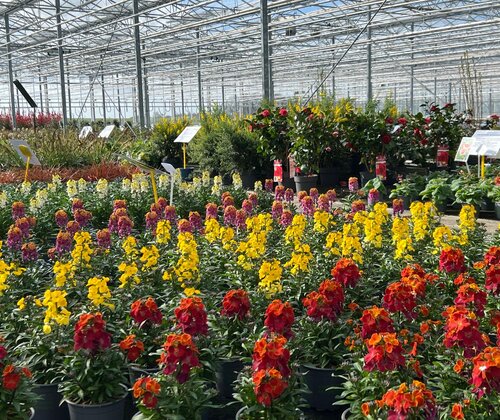
Arjen Stouten runs Huyskweker Stouten V.O.F. in Oosterland, the Netherlands, together with his family. On approximately 1 hectare of greenhouse space, the family-run business professionally cultivates high-quality summer flowers, as well as a wide assortment of bedding and balcony plants and various perennials. A particular focus is on balcony and patio planters, as well as hanging baskets with built-in water reservoirs. The company sells directly to private end customers throughout the Netherlands and a small part of Belgium.
Enthusiast
5 minutes reading time
livestock farming
Land Creates Life: Greater Transparency When Buying Honey
New Rules of Origin Effective June 2026
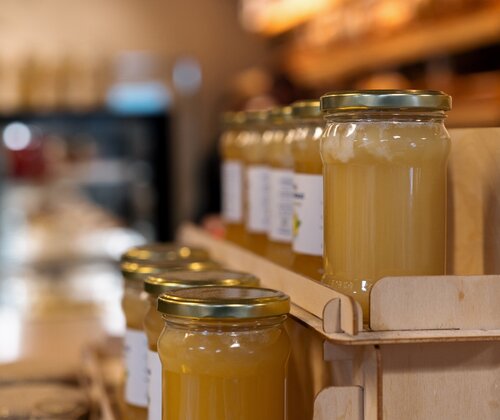
How can you tell if honey is truly from Austria? With regional specialties, organic products, and inexpensive imported blends on the shelves, it’s often not easy for Austrian honey to stand out in the supermarket. While checking the label helps, many origin labels have been rather vague up until now. That’s exactly what the new 2026 amendment to the Honey Regulation is set to change.
Beginner
6 minutes reading time
Land creates life: Sugar - From Luxury Item to Everyday Product
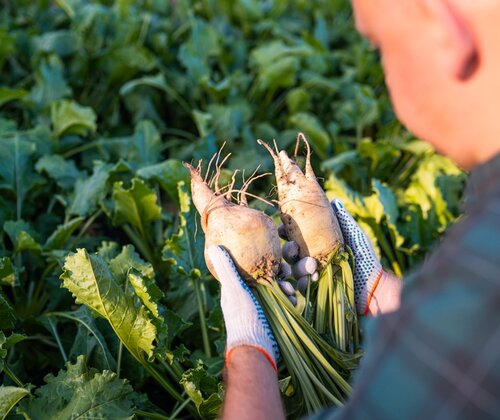
Whether in cakes, muesli, spreads, or beverages, sugar is an indispensable part of our diet. But what seems so commonplace today was once something quite special. Until well into the Middle Ages, honey was the only sweetener in Austria. It wasn’t until later that beet and cane sugar found their way into our kitchens. The Land schafft Leben association explains the journey the beet takes from cultivation to the sugar aisle and how production works in Austria.
Beginner
7 minutes reading time
