Careers
Multi-Knowledge: Fall lawn care - strengthen your lawn now and prepare it for winter
Brown blades of grass, bare patches, and a lawn that looks a bit worn out overall: Heat and prolonged dry spells can take a significant toll in the summer. But even if your lawn looks anything but healthy right now, there’s still plenty you can do. Fall is the ideal time to help your lawn recover and, at the same time, prepare it well for winter.
That’s because, while the intense heat is over, the soil is still pleasantly warm. Cooler temperatures and more frequent rainfall create good conditions for growth. The grass can recover, form new roots, and gradually fill in smaller gaps.
Beginner
6 minutes reading time
Although the intense heat is over, the soil is still pleasantly warm. Cooler temperatures and more frequent rainfall create ideal conditions for growth. The grass can recover, form new roots, and gradually fill in small gaps.
By following these four steps, you can lay the perfect foundation for a healthy lawn next year:
Although the intense heat is over, the soil is still pleasantly warm. Cooler temperatures and more frequent rainfall create ideal conditions for growth. The grass can recover, form new roots, and gradually fill in small gaps.
By following these four steps, you can lay the perfect foundation for a healthy lawn next year:


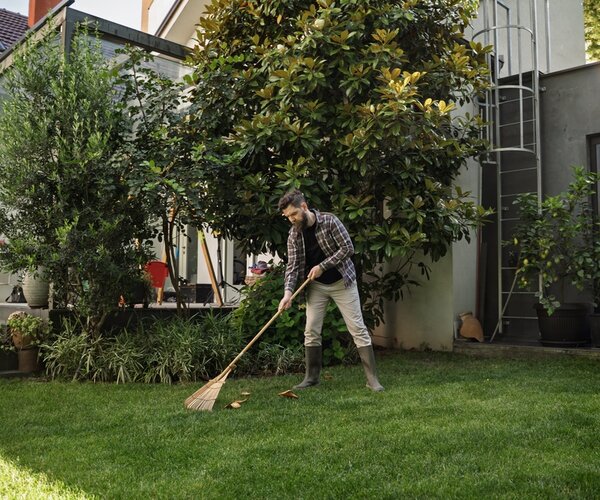
3. Remove leaves regularly
As beautiful as colorful fall leaves may be, they shouldn’t be left on the lawn for too long. A thick layer of leaves blocks light and air from reaching the grass. At the same time, moisture can build up underneath, which can promote the growth of moss and fungal diseases. Therefore, be sure to rake up fallen leaves regularly and remove them from the lawn.

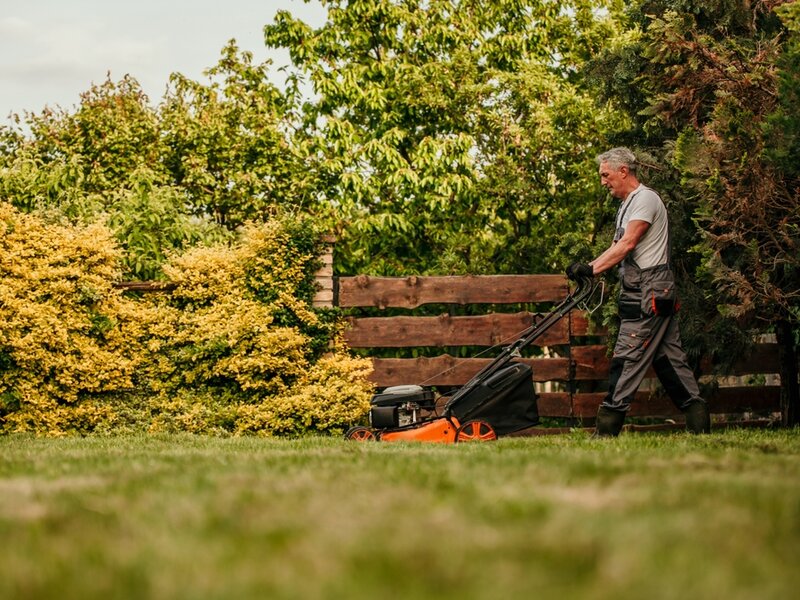
4. Don't mow the grass too short during the last mowing of the season
Depending on the weather, the last mowing of the season usually takes place in late October or early November. When mowing, be careful not to cut the grass too short. A cutting height of about 5 to 6 cm is ideal.
This preserves enough foliage to absorb light, while also providing the grass with better protection against frost. The same rule applies in the fall: It’s better to mow regularly while the lawn is still growing than to cut it back drastically just once before winter.
How to use BodenVital and Royal Green
Apply BodenVital evenly to the lawn according to the recommended usage instructions.
Next, apply Royal Green as a 2% solution: To do this, mix 100 ml of Royal Green with 5 liters of water and apply it evenly to the lawn. For continuous plant strengthening, we recommend applying it three times a year—in the spring, early summer, and fall. This effectively combines nutrient supply, soil health, and plant strengthening.
Apply BodenVital evenly to the lawn according to the recommended usage instructions.
Next, apply Royal Green as a 2% solution: To do this, mix 100 ml of Royal Green with 5 liters of water and apply it evenly to the lawn. For continuous plant strengthening, we recommend applying it three times a year—in the spring, early summer, and fall. This effectively combines nutrient supply, soil health, and plant strengthening.
Lay the foundation now for a beautiful lawn in the spring
Even if the lawn looks a little uninviting at first after a hot summer, fall offers a real opportunity for regeneration. With sufficient nutrients, active soil life, strong roots, and the right care, the grass can recover and head into winter well-prepared.
And the work you do in the fall pays off twice over: A healthy, well-rooted lawn has a better foundation for a strong start in the spring—and is also better equipped to handle the challenges of the coming summer.
Multiwissen - Barbara's effective tips for every home
In our blog series “Multiwissen—Barbara’s effective tips for every home,” discover the best advice from our expert Barbara Enengel for a sustainable home and a thriving garden. Whether you’re looking to clean your living space in an eco-friendly way or transform your garden into a blooming oasis, Barbara’s tips will enrich your everyday life. Stay tuned for inspiring stories and smart life hacks! Barbara Enengel studied agriculture at the University of Natural Resources and Life Sciences, Vienna. She is interested in natural cycles and ecological relationships in nature and the garden. She is particularly committed to creating a diverse and healthy habitat for people, animals, and plants—a principle she passionately puts into practice in her beautifully landscaped and ecologically managed garden.
This may also interest you …

Garden & Plants
Multiknowledge: New and old wild fruits—hardy treasures for the natural garden
Wild fruit is experiencing a renaissance. What was once a common sight in farm and monastery gardens is now finding its place once again in natural gardens. Whether it’s cornelian cherry, serviceberry, or medlar—these old-fashioned trees and shrubs delight with their magnificent blooms, aromatic fruits, and hardiness. At the same time, they provide valuable food for bees, butterflies, and birds and create habitats right on your doorstep. With healthy soil and the support of Effective Microorganisms, they thrive and enrich the garden for many decades.
Beginner
6 minutes reading time
Garden & Plants
Multi-Knowledge: Two-year-old summer flowers, just like in Grandma's cottage garden
There are gardens that don’t look manicured or perfectly planned - and that’s exactly why they’re so beautiful. Amid lush blooms, fragrant herbs, and buzzing insects, that special atmosphere emerges - one that many still remember from old farm gardens. When hollyhocks sway in the summer breeze, bees flit through the foxgloves, and the scent of night violets wafts through the garden in the evening, your own garden suddenly feels wonderfully timeless.
Beginner
10 minutes reading time

Garden & Plants
Multikosmos: A Success Story
“In times of need, we come together more closely”
St. Anton am Arlberg is known far beyond Austria’s borders as a legendary ski resort. Lush green meadows in summer or snow-capped mountains in winter are what most people think of first when they hear the name. But in August 2024, severe storms rocked the idyllic region. Heavy rain triggered mudslides in parts of the Landeck and Innsbruck-Land districts, causing widespread flooding. St. Anton (Landeck district) closed mountain railways and roads, bringing daily life to a standstill for a moment. During those days, it became clear how quickly a familiar living environment can turn into a crisis zone—and how crucial solidarity is when the familiar suddenly collapses.
Beginner
8 minutes reading time
