Careers

In memory of Hilde Umdasch: “You have to contribute something positive to bring about positive change.”
With the passing of Hilde Umdasch, we have lost an impressive business leader who combined courage, humanity, and corporate responsibility. Back in 2014, we had the privilege of interviewing her for our then-current multikosmos magazine.
Beginner
8 minutes reading time
In the interview, she spoke about appreciation in the business world, the courage to break new ground, failure, and why one should remain curious throughout one’s life. Many of her insights have lost none of their relevance to this day. To mark this occasion, we are republishing the 2014 interview in its original form. Information regarding positions, companies, and general circumstances therefore reflects the situation at that time.
This interview first appeared in June 2014 in multikosmos, Issue No. 17. The following text is reproduced in its original version as a historical document.
In the interview, she spoke about appreciation in the business world, the courage to break new ground, failure, and why one should remain curious throughout one’s life. Many of her insights have lost none of their relevance to this day. To mark this occasion, we are republishing the 2014 interview in its original form. Information regarding positions, companies, and general circumstances therefore reflects the situation at that time.
This interview first appeared in June 2014 in multikosmos, Issue No. 17. The following text is reproduced in its original version as a historical document.
For decades, Hilde Umdasch, a native of Amstetten, has not only been deeply rooted in the family-owned company Umdasch—where she serves as chair of the supervisory board—but is also the founder of the garden supply chain bellaflora. There, just over a year ago, she initiated a sustainable overhaul of the plant protection product line—all synthetic chemical pesticides were removed from the shelves and replaced with natural and organic products. “A bold decision,” says Hilde Umdasch herself—and by no means her only one. In an interview with multikosmos, the successful entrepreneur explains, among other things, why it’s always worth taking risks and trying something new.
For decades, Hilde Umdasch, a native of Amstetten, has not only been deeply rooted in the family-owned company Umdasch—where she serves as chair of the supervisory board—but is also the founder of the garden supply chain bellaflora. There, just over a year ago, she initiated a sustainable overhaul of the plant protection product line—all synthetic chemical pesticides were removed from the shelves and replaced with natural and organic products. “A bold decision,” says Hilde Umdasch herself—and by no means her only one. In an interview with multikosmos, the successful entrepreneur explains, among other things, why it’s always worth taking risks and trying something new.
You are the chairwoman of the supervisory board of an international industrial group with more than 7,000 employees worldwide. In addition, you single-handedly built up the company bellaflora and turned it into Austria’s leading garden center. A picture-perfect success story…
Of course, I’m delighted by the successes in my career. But for me, being successful also means that employees are satisfied with their work and their compensation and feel at home in the company. When these factors are generally in place, it can contribute greatly to one’s own sense of fulfillment.
Views that are probably not taken for granted in the business world?
I believe that appreciation, humanity, and ethics are enormously important, especially in the business world. We need these values in our daily interactions because they’re what enable us to behave in a socially responsible manner in the first place. This is important in a family, but also in a company. For me, it would be unimaginable to lead a company focused exclusively on maximizing profits, without any sense of social responsibility.
You are the chairwoman of the supervisory board of an international industrial group with more than 7,000 employees worldwide. In addition, you single-handedly built up the company bellaflora and turned it into Austria’s leading garden center. A picture-perfect success story…
Of course, I’m delighted by the successes in my career. But for me, being successful also means that employees are satisfied with their work and their compensation and feel at home in the company. When these factors are generally in place, it can contribute greatly to one’s own sense of fulfillment.
Views that are probably not taken for granted in the business world?
I believe that appreciation, humanity, and ethics are enormously important, especially in the business world. We need these values in our daily interactions because they’re what enable us to behave in a socially responsible manner in the first place. This is important in a family, but also in a company. For me, it would be unimaginable to lead a company focused exclusively on maximizing profits, without any sense of social responsibility.
You took over the Umdasch company from your father and built up bellaflora from scratch. One is an industrial conglomerate; the other sells plants and gardening supplies. How did this “mix” come about?
Founding bellaflora was certainly a bold move back then—and an experiment, too. Being able to successfully build it up with capable, dedicated employees was a new experience for me and a wonderful validation. Of course, my work and experience at our company helped me a lot, but that was, after all, a completely different industry—one that can’t really be compared to an industrial enterprise.
And yet you took the plunge anyway…
Yes, we traveled around a lot beforehand to explore the possibilities. Garden centers already existed in Germany and Switzerland, but back in the 1970s, self-service at a plant market was still unthinkable here. We gave it a try anyway and were the first to do so in Austria.
And now you are the first to have completely removed synthetic chemical fertilizers and pesticides from your product line and to sell only natural and organic products, such as Effective Microorganisms.
Of course, in the beginning, this was quite a process of discussion that required a lot of persuasion. It was a decision that took courage. But still: This step reflects our philosophy. You have to contribute something positive to bring about positive change. I think you can only be credible if you do something out of deep conviction and don’t just put on a “green facade.”
You took over the Umdasch company from your father and built up bellaflora from scratch. One is an industrial conglomerate; the other sells plants and gardening supplies. How did this “mix” come about?
Founding bellaflora was certainly a bold move back then—and an experiment, too. Being able to successfully build it up with capable, dedicated employees was a new experience for me and a wonderful validation. Of course, my work and experience at our company helped me a lot, but that was, after all, a completely different industry—one that can’t really be compared to an industrial enterprise.
And yet you took the plunge anyway…
Yes, we traveled around a lot beforehand to explore the possibilities. Garden centers already existed in Germany and Switzerland, but back in the 1970s, self-service at a plant market was still unthinkable here. We gave it a try anyway and were the first to do so in Austria.
And now you are the first to have completely removed synthetic chemical fertilizers and pesticides from your product line and to sell only natural and organic products, such as Effective Microorganisms.
Of course, in the beginning, this was quite a process of discussion that required a lot of persuasion. It was a decision that took courage. But still: This step reflects our philosophy. You have to contribute something positive to bring about positive change. I think you can only be credible if you do something out of deep conviction and don’t just put on a “green facade.”
How do you view this decision today, about a year after the change?
We stand by it and hope that we can convince many people that it makes sense to ban chemicals from the garden. Essentially, we’ve also set a trend with this—which has many advantages. But not least, it has also strengthened our identity and credibility. Our employees support this, believe in it, and stand by it. Many of them say, “Now I’m even prouder to work at bellaflora.”
What has the feedback been like regarding Effective Microorganisms?
Interest has skyrocketed. The key is to have the courage to take the plunge—and then to stick with it consistently.
So, another bold decision that paid off?
Challenges are always good, because you only grow when you’re pushed to your limits. And that’s essential if you want to be among the best.
Never failed?
Of course I have—failure is a process you have to go through in life. I haven’t made nothing but great decisions either. The most important thing is to learn from them and not make the same mistakes a second or third time. But the fact is, you also have to keep daring to try new things. In the end, it’s often the case that something positive comes out of what seems negative. Sometimes that sets you on a good path you might not have even seen before.
You seem very calm. Is that one of the benefits of your many years of professional experience?
Oh dear, I’m afraid I’m not quite that calm. Of course, I no longer get upset about things when I know from the start that it’s pointless. But when people deliberately disappoint me, for example, I get just as emotional as I used to. But there’s another side to it all: You can’t start thinking that it’s too late anyway. You have to be willing to take risks throughout your life—and stay curious!
Speaking of interest, how important is the garden to you personally?
It’s very important to me—bellaflora has certainly contributed to this passion. I enjoy working in the garden—it relaxes me and gives me a chance to think about all sorts of things. Even though afterward I’m usually sore all over and feel muscles I didn’t even know I had, I’m absolutely thrilled with all the flowers, shrubs, and my pond. It’s in a garden that you really come to realize just how wonderful nature is.
You seem very calm. Is that one of the benefits of your many years of professional experience?
Oh dear, I’m afraid I’m not quite that calm. Of course, I no longer get upset about things when I know from the start that it’s pointless. But when people deliberately disappoint me, for example, I get just as emotional as I used to. But there’s another side to it all: You can’t start thinking that it’s too late anyway. You have to be willing to take risks throughout your life—and stay curious!
Speaking of interest, how important is the garden to you personally?
It’s very important to me—bellaflora has certainly contributed to this passion. I enjoy working in the garden—it relaxes me and gives me a chance to think about all sorts of things. Even though afterward I’m usually sore all over and feel muscles I didn’t even know I had, I’m absolutely thrilled with all the flowers, shrubs, and my pond. It’s in a garden that you really come to realize just how wonderful nature is.
About the Person
A native of Lower Austria, she studied business and languages and joined the family business, Umdasch, at the age of 24. The Amstetten-based industrial group has achieved global success in formwork and storefitting, employs more than 7,000 people, and currently operates in 70 countries. Following her father’s death in 1990, Hilde Umdasch took over as CEO of the group. “For a long time, it wasn’t a given that a woman would lead a company in this industry. That has sometimes caused some friction with men,” she explains. In 1978, Hilde Umdasch founded the garden supply chain bellaflora, which currently has 26 locations throughout Austria and more than 500 employees. Her philosophy: “You have to contribute something positive to bring about positive change. I think you can only be credible if you actually do something—not just put on a ‘green facade.’” Appreciation, transparency, and ethics are important to her not only in business—she is also deeply committed to social causes outside the company: “I see it as an obligation that is simply part of my life and has long been a tradition in my family as well.”

This may also interest you …
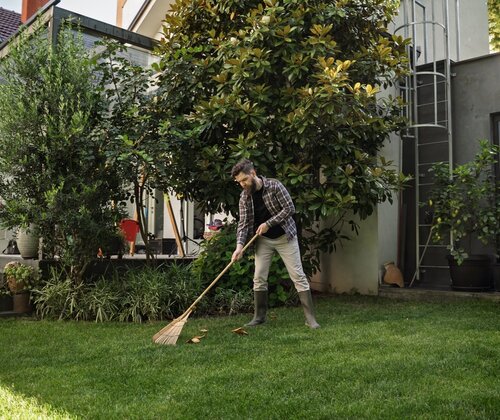
Garden & Plants
Multi-Knowledge: Fall lawn care - strengthen your lawn now and prepare it for winter
Brown blades of grass, bare patches, and a lawn that looks a bit worn out overall: Heat and prolonged dry spells can take a significant toll in the summer. But even if your lawn looks anything but healthy right now, there’s still plenty you can do. Fall is the ideal time to help your lawn recover and, at the same time, prepare it well for winter.
That’s because, while the intense heat is over, the soil is still pleasantly warm. Cooler temperatures and more frequent rainfall create good conditions for growth. The grass can recover, form new roots, and gradually fill in smaller gaps.
Beginner
6 minutes reading time
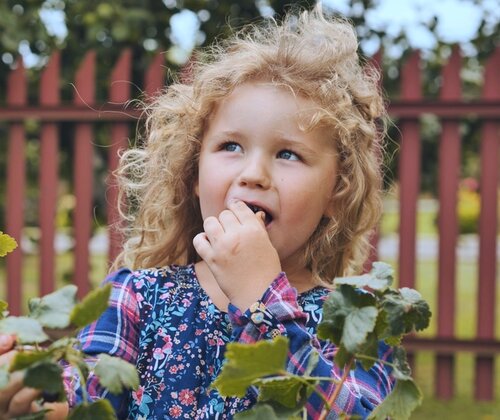
Garden & Plants
Multiknowledge: New and old wild fruits—hardy treasures for the natural garden
Wild fruit is experiencing a renaissance. What was once a common sight in farm and monastery gardens is now finding its place once again in natural gardens. Whether it’s cornelian cherry, serviceberry, or medlar—these old-fashioned trees and shrubs delight with their magnificent blooms, aromatic fruits, and hardiness. At the same time, they provide valuable food for bees, butterflies, and birds and create habitats right on your doorstep. With healthy soil and the support of Effective Microorganisms, they thrive and enrich the garden for many decades.
Beginner
6 minutes reading time
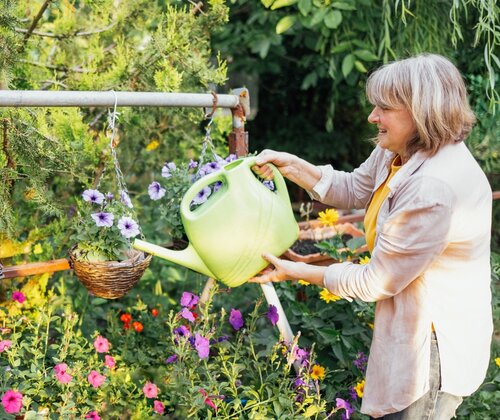
Garden & Plants
Multi-Knowledge: Two-year-old summer flowers, just like in Grandma's cottage garden
There are gardens that don’t look manicured or perfectly planned - and that’s exactly why they’re so beautiful. Amid lush blooms, fragrant herbs, and buzzing insects, that special atmosphere emerges - one that many still remember from old farm gardens. When hollyhocks sway in the summer breeze, bees flit through the foxgloves, and the scent of night violets wafts through the garden in the evening, your own garden suddenly feels wonderfully timeless.
Beginner
10 minutes reading time
