Careers
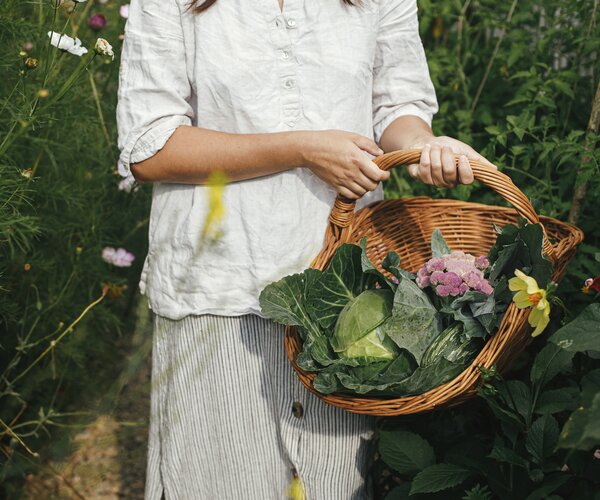
Multi-knowledge: Perennial Vegetables – Vegetable Plants That Last for Years
Permaveggis aren’t high-maintenance. These perennial vegetable plants are the marathon runners of the vegetable garden. Once planted, they stay put. They put down deep roots, withstand frost, survive dry spells, and deliver a harvest year after year—often long after annual crops are still listed in seed catalogs.
Perennial vegetables bring stability to the system: less digging, less replanting, less stress. Instead: strong roots, vibrant soil, and a garden that grows stronger with each passing year—nurtured with probiotic plant fortification, completely organic.
Beginner
5 minutes reading time
Perennial vegetables bring stability to the system: less digging, less replanting, less stress. Instead: strong roots, vibrant soil, and a garden that grows stronger every year—nurtured with probiotic plant supplements, completely organic.
Perennial vegetables bring stability to the system: less digging, less replanting, less stress. Instead: strong roots, vibrant soil, and a garden that grows stronger every year—nurtured with probiotic plant supplements, completely organic.
Perennial vegetable crops as the foundation of regenerative farming systems
While annuals germinate anew each year and invest all their energy in flowering and seed production, permaveggis build lasting structures because they work underground. Their roots loosen the soil, create pores for water and air, and feed microorganisms with root exudates. This keeps the soil well-rooted, protected, and active. In times of increasing weather extremes, such crops are becoming increasingly important. They are resilient, labor-efficient, and promote a vibrant soil ecosystem.
The result:
- improved water retention
- increased humus formation
- greater resilience to extreme weather
- continuous harvests over many years
- less maintenance
The soil remains covered or well-rooted year-round - a crucial factor for regeneration.
While annuals germinate anew each year and invest all their energy in flowering and seed production, permaveggis build lasting structures because they work underground. Their roots loosen the soil, create pores for water and air, and feed microorganisms with root exudates. This keeps the soil well-rooted, protected, and active. In times of increasing weather extremes, such crops are becoming increasingly important. They are resilient, labor-efficient, and promote a vibrant soil ecosystem.
The result:
- improved water retention
- increased humus formation
- greater resilience to extreme weather
- continuous harvests over many years
- less maintenance
The soil remains covered or well-rooted year-round - a crucial factor for regeneration.
The Stars Among the Endurance Runners
There are many permaculture vegetables that are ideal for growing in the garden. Here is a fine selection.
There are many permaculture vegetables that are ideal for growing in the garden. Here is a fine selection.
Winter onion – the early bloomer
While other beds are still dormant, it’s already sprouting fresh green shoots. It doesn’t form a distinct storage bulb, but rather sturdy clumps that can be cut repeatedly. And with each cutting, it sprouts anew. Hardy, frost-resistant, and ideal for permanent border plantings. A classic for anyone who doesn’t want to go without fresh flavor in early spring.
Oat Root – The Rediscovered
Almost forgotten, yet full of qualities. Oat root is usually grown as a biennial, but it persists in the garden through self-seeding. Its long taproot loosens the soil and yields a mild, nutty root vegetable. In its second year, purple flowers appear, attracting pollinators and contributing to biodiversity.
Asparagus – The Patient One
Asparagus is one of the best-known perennial vegetable crops. It is not a quick fix, but those who give it two to three years to establish itself will be rewarded with years of harvests. Once established, it grows stronger from season to season. Its deep taproots draw nutrients from lower soil layers and increase the bed’s drought resistance.
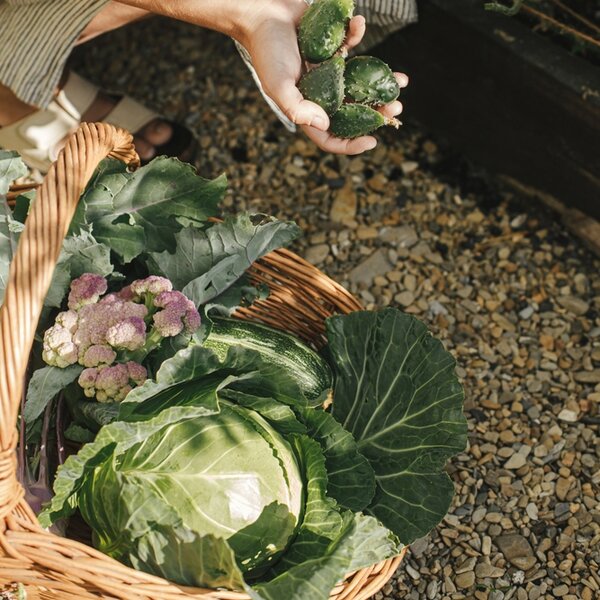
Horseradish – the spicy kick
Indestructible, vigorous, and intensely aromatic. Horseradish is extremely hardy. Its taproot loosens even heavy soils. The potent roots have antibacterial properties due to the mustard oils they contain. Because it spreads so vigorously, strategic planting or the use of a root barrier is recommended.
Perennial kale – the continuous harvest
No head, no drama. Instead, a continuous supply of new leaves. In mild winters, it stays green and ready for harvest. Perfect for self-sufficient gardens where fresh leafy greens are grown year-round.
Tuberous chervil – the finely textured one
Decorative, spiral-shaped tubers, with a delicate nutty flavor and hardy nature. It remains in the ground, sprouts again, and protects the soil surface from drying out with its growth, while reducing weed pressure. A quiet performer with culinary charm.
Rhubarb – the Powerhouse
Large leaves, sturdy stems, impressive presence. Rhubarb is a hardy perennial. Year after year, it yields a fresh harvest in the spring. Its lush foliage shades the soil and promotes humus formation—especially when it is returned to the cycle as mulch.
Red sorrel – a splash of color
Red veins, green leaves, a delicate tartness. Blood sorrel brings color to the garden bed and freshness to the plate. Perennial, robust, and tolerant of pruning, it sprouts early and provides tender leaves with a pleasant lemony note over a long period. It loves partial shade and thrives in consistent moisture. A quiet structural element that effortlessly combines flavor, ornamental value, and longevity.
Good King Henry – the undemanding one
Unassuming, hardy, and surprisingly versatile. Good King Henry has been a staple in gardens for centuries and reliably produces fresh green foliage. The young shoots taste mild, like spinach, while the flower heads are delicately reminiscent of broccoli. Deep-rooted, winter-hardy, and tolerant of pruning, it holds its own—preferably in nutrient-rich soil.
Large leaves, sturdy stems, impressive presence. Rhubarb is a hardy perennial. Year after year, it yields a fresh harvest in the spring. Its lush foliage shades the soil and promotes humus formation—especially when it is returned to the cycle as mulch.
Red sorrel – a splash of color
Red veins, green leaves, a delicate tartness. Blood sorrel brings color to the garden bed and freshness to the plate. Perennial, robust, and tolerant of pruning, it sprouts early and provides tender leaves with a pleasant lemony note over a long period. It loves partial shade and thrives in consistent moisture. A quiet structural element that effortlessly combines flavor, ornamental value, and longevity.
Good King Henry – the undemanding one
Unassuming, hardy, and surprisingly versatile. Good King Henry has been a staple in gardens for centuries and reliably produces fresh green foliage. The young shoots taste mild, like spinach, while the flower heads are delicately reminiscent of broccoli. Deep-rooted, winter-hardy, and tolerant of pruning, it holds its own—preferably in nutrient-rich soil.
A Healthy Soil Through Effective Microorganisms
Perennial crops benefit enormously from an active soil microbiome. Effective microorganisms—mixed cultures of lactic acid bacteria, yeasts, and photosynthetic bacteria—promote fermentation rather than decay, thereby supporting soil life. Especially in permanently planted areas, a microbial balance can develop that becomes more sustainable year after year.
This means:
- faster conversion of organic matter
- better nutrient availability
- activated root zones
- more stable soil structure
For a perfect start in the garden bed, apply organic black soil for vegetables. To activate the soil in the spring, about two weeks before planting, it is worth working bokashi or organic fertilizers such as sheep’s wool pellets and some ZeoBas rock flour into the bed. Water the fresh young plants with Roots - diluted at a ratio of 100 ml Roots to 10 L of water—and then mulch. Keep watering the organic mulch (grass clippings, crop residues) with Roots so that it decomposes quickly and provides a fresh supply of nutrients for soil life.
Even after pruning, it’s worth watering the Permaveggis with Roots to support regeneration and thus promote growth once again. Regular applications of compost ensure a continuous, balanced supply of nutrients. Continuity is key. Permaveggis think in years—so does the soil life.
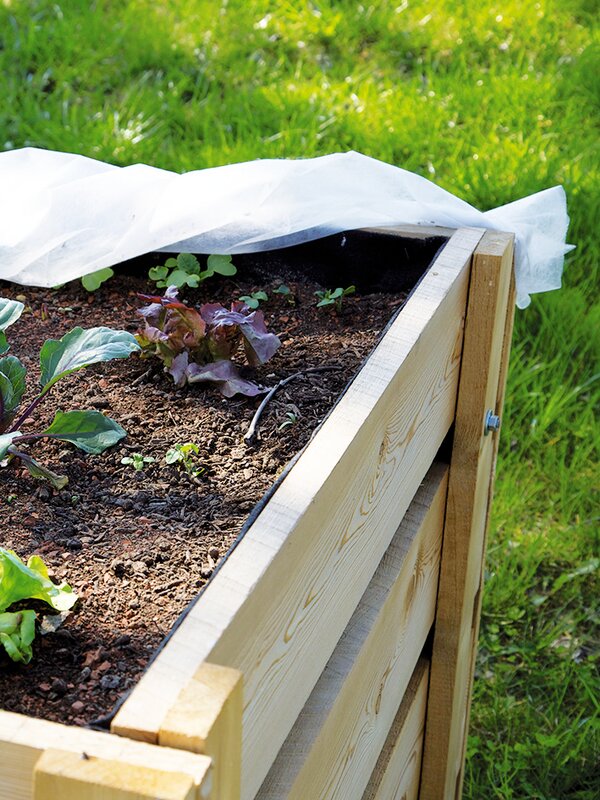
Bottom line: A garden built to last
Permaveggis represent a paradigm shift. Away from a seasonal mindset, toward permanent structures. Less upheaval, more building. Less short-term maximization, more stability. PermaVegs are thus not just hardy plants - they are the building blocks of a sustainable cultivation system and form the backbone of a resilient, regenerative garden.
Permaveggis represent a paradigm shift. Away from a seasonal mindset, toward permanent structures. Less upheaval, more building. Less short-term maximization, more stability. PermaVegs are thus not just hardy plants - they are the building blocks of a sustainable cultivation system and form the backbone of a resilient, regenerative garden.
Multiwissen - Barbara's Practical Tips for Every Home
Discover the best advice from our expert Barbara Enengel for a sustainable home and a blooming garden in our blog series “Multiwissen – Barbara’s Effective Tips for Every Home.” Whether you’re looking to clean your living space using eco-friendly methods or transform your garden into a blooming oasis, Barbara’s tips will enrich your daily life. Stay tuned for inspiring stories and smart life hacks! Barbara Enengel studied agriculture at the University of Natural Resources and Life Sciences, Vienna. She is interested in natural cycles and ecological relationships in nature and the garden. She is particularly passionate about creating a diverse and healthy habitat for people, animals, and plants—a principle she passionately puts into practice in her beautifully landscaped and ecologically managed garden.
This may also interest you …

Garden & Plants
Multikosmos: What matters is consistency
Column by Anne Lorch and Susanne Schütz
Change is sweeping the globe at every level, with a wide range of alarming consequences. New ideas for resolving this dilemma are emerging, requiring trust in simple and positive solutions. The use of Effective Microorganisms has established itself as a reliable means of supporting a more livable environment.
Beginner
7 minutes reading time
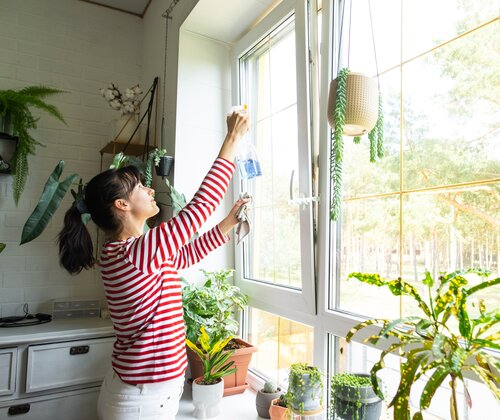
Household
Multi-knowledge: Spring cleaning that lasts
As soon as spring arrives and the sun regains its strength, the effects of wind, snow, and frosty days become visible. Windows appear dull, green deposits have formed on the patio, and dirt films in the greenhouse obscure the important light. Thorough cleaning not only brings new shine, but also more light, improved living quality, and better conditions for healthy plant growth. With probiotic Multikraft cleaners and ReinZeit wipes, spring cleaning is effective, gentle, and sustainable.
Beginner
5 minutes reading time
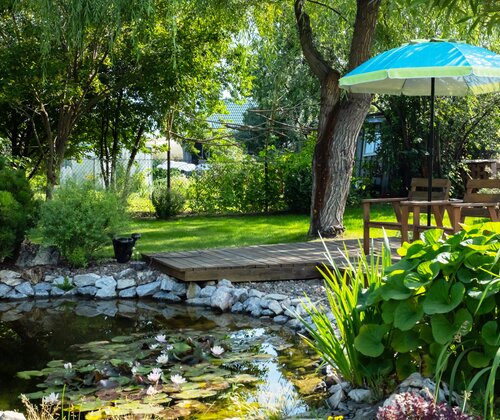
Pond
Finally getting clear pond water: Here's how it works
Pond and biotope owners know the feeling: you're looking forward to your first dip in the cool water, but nasty floating algae or annoying sludge thwart your plans: cloudy, greenish water is anything but inviting. In this blog post, we'll show you how to get your pond water clear again or successfully prevent discoloration in the first place!
Beginner
10 minutes reading time
