Careers

Multikosmos: What matters is consistency
Column by Anne Lorch and Susanne Schütz
Change is sweeping the globe at every level, with a wide range of alarming consequences. New ideas for resolving this dilemma are emerging, requiring trust in simple and positive solutions. The use of Effective Microorganisms has established itself as a reliable means of supporting a more livable environment.
Beginner
7 minutes reading time
Indigenous peoples live in accordance with the natural law that their way of life is subject to constant change, and they adapt to the consequences of major upheavals in order to survive. As early as 500 B.C., Heraclitus observed that permanence entails constant change and that nothing remains “set in stone.”
Where would we be today if we had lived for millennia without all those discoveries? Three thousand years after the Greek philosopher, we look back on times when remarkable insights took us by surprise, making life easier, and which we have been diligently utilizing ever since. We, as a persistent, capable species, have achieved great goals in the civilized world and can be proud of them. The technological age opened up groundbreaking horizons of knowledge for us. We gratefully embraced them.
Indigenous peoples live in accordance with the natural law that their way of life is subject to constant change, and they adapt to the consequences of major upheavals in order to survive. As early as 500 B.C., Heraclitus observed that permanence entails constant change and that nothing remains “set in stone.”
Where would we be today if we had lived for millennia without all those discoveries? Three thousand years after the Greek philosopher, we look back on times when remarkable insights took us by surprise, making life easier, and which we have been diligently utilizing ever since. We, as a persistent, capable species, have achieved great goals in the civilized world and can be proud of them. The technological age opened up groundbreaking horizons of knowledge for us. We gratefully embraced them.
Is all that glitters gold?
Our predecessors celebrated their achievements and successes. Economic growth flourished. It led our planet, without a second thought, into the irreversible depletion of nearly all natural resources. For decades, we accepted this as inevitable. Now, environmental damage reveals the flip side of these wonderful advances. Realizing that nature’s resources were often plundered for free—and still are—is a bitter pill we must now swallow. The resulting damage is incredibly diverse. Creative as humans are, they quickly developed promising measures that “lucratively” keep economic growth going. This raises questions and shows that the raw gold of economic development has lost its luster.
Actively Changing Course
Many thoughtful people feel a sense of unease and are concerned about alleviating the manifold environmental pressures. Effective Microorganisms (EM) are a highly versatile, indeed almost limitless, solution that can be applied at virtually every level of our lives. For example, the consequences of destructive natural events can be mitigated through increased use of EM, or damage can even be completely repaired.
One Path to a New Direction
In her gardening classes, organic farming pioneer Susanne Schütz encourages participants to think about taking action in their daily lives for the environment and for themselves—even without a large garden. During the lunch break, delicious salads made from produce grown using EM are a real eye-opener. People realize that EM-grown produce has a much more intense flavor than what’s typically available at the market. It simply lacks ingredients like flavor enhancers, artificial flavors, and preservatives.
Contributing a small piece to the larger environmental mosaic and creating a personal little garden paradise where Effective Microorganisms call the shots and we are merely the executors. It makes sense and is fun to contribute to environmental protection, to feel like a small piece in the larger environmental mosaic. It’s inspiring when our unwavering determination to work with EM spreads to our gardening neighbors, when communication over the fence even turns into a veritable harvest race, and “just as an aside” brings our plot back into order.
Is all that glitters gold?
Our predecessors celebrated their achievements and successes. Economic growth flourished. It led our planet, without a second thought, into the irreversible depletion of nearly all natural resources. For decades, we accepted this as inevitable. Now, environmental damage reveals the flip side of these wonderful advances. Realizing that nature’s resources were often plundered for free—and still are—is a bitter pill we must now swallow. The resulting damage is incredibly diverse. Creative as humans are, they quickly developed promising measures that “lucratively” keep economic growth going. This raises questions and shows that the raw gold of economic development has lost its luster.
Actively Changing Course
Many thoughtful people feel a sense of unease and are concerned about alleviating the manifold environmental pressures. Effective Microorganisms (EM) are a highly versatile, indeed almost limitless, solution that can be applied at virtually every level of our lives. For example, the consequences of destructive natural events can be mitigated through increased use of EM, or damage can even be completely repaired.
One Path to a New Direction
In her gardening classes, organic farming pioneer Susanne Schütz encourages participants to think about taking action in their daily lives for the environment and for themselves—even without a large garden. During the lunch break, delicious salads made from produce grown using EM are a real eye-opener. People realize that EM-grown produce has a much more intense flavor than what’s typically available at the market. It simply lacks ingredients like flavor enhancers, artificial flavors, and preservatives.
Contributing a small piece to the larger environmental mosaic and creating a personal little garden paradise where Effective Microorganisms call the shots and we are merely the executors. It makes sense and is fun to contribute to environmental protection, to feel like a small piece in the larger environmental mosaic. It’s inspiring when our unwavering determination to work with EM spreads to our gardening neighbors, when communication over the fence even turns into a veritable harvest race, and “just as an aside” brings our plot back into order.
From Susanne's
wealth of experience
For nearly 50 years, Susanne has been consistently advising participants in organic gardening courses on practices that are both environmentally friendly and highly effective—such as turning vegetable scraps from the market or supermarket into bokashi instead of throwing them in the green bin. With the addition of EM, a wide variety of substances from synthetic fertilizers and pesticides are broken down and decomposed by the EM’s own bacteria, yeasts, and fungi. The “purified” bokashi from conventionally grown vegetables can then be safely returned to the natural cycle in the garden or via a compost pile.
“Enjoy your meal!” A harvest in February is possible because vegetables grown with EM are much more resilient and can withstand the winter cold. They go straight from the garden bed into the cooking pot without any intermediate storage.
For nearly 50 years, Susanne has been consistently advising participants in organic gardening courses on practices that are both environmentally friendly and highly effective—such as turning vegetable scraps from the market or supermarket into bokashi instead of throwing them in the green bin. With the addition of EM, a wide variety of substances from synthetic fertilizers and pesticides are broken down and decomposed by the EM’s own bacteria, yeasts, and fungi. The “purified” bokashi from conventionally grown vegetables can then be safely returned to the natural cycle in the garden or via a compost pile.
“Enjoy your meal!” A harvest in February is possible because vegetables grown with EM are much more resilient and can withstand the winter cold. They go straight from the garden bed into the cooking pot without any intermediate storage.
01 If you don’t have your own garden, instead of throwing vegetable scraps in the compost bin, spray them with Compost Starter in a bokashi bucket, sprinkle them with EM ceramic powder and Dried Bokashi, pack them down lightly (squeezing out the air), and give them to another gardener.
02 A lot of bokashi leachate is produced, especially from watery waste such as cucumbers, zucchini, and squash. Drain off the liquid and use it as high-quality plant food (diluted) while it still smells pleasant.
03 On warm days, scatter kitchen bokashi in rows across a loosened garden bed. By planting time, the coarse bokashi material will have decomposed, warming the cold soil and providing a “cozy bed” for early plantings.
04 Scab on apple trees causes premature leaf drop and deprives the fruit of energy needed for ripening due to insufficient photosynthesis. Fruit quality suffers. Compost the infected leaves. Additionally, before flowering and leaf emergence, spray the trees and the soil around them with Fermented horsetail extract or water them with Fermented nettle extract.
05 Purchase garlic for planting from a specialty store. Bulbs from the supermarket cannot tolerate cold spells. Planting garlic cloves among vegetables repels aphids and, when placed between rows of strawberries, prevents gray mold. Spring-planted garlic can be stored longer than summer-grown garlic.
06 Greening beet tops are 1. bitter and 2. attacked by carrot flies if the root tops protrude from the soil. Keep hilling up the soil up to the leaf tops. Hidden like this, carrot flies won’t find a place to lay their eggs.
This may also interest you …
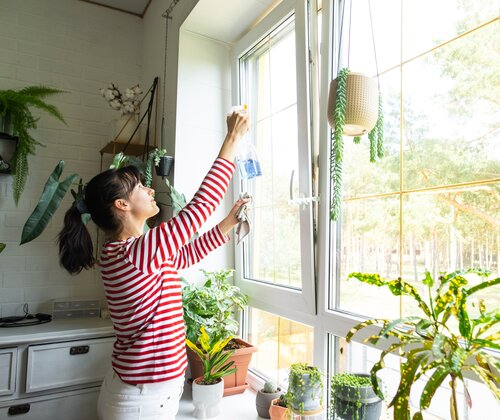
Household
Multi-knowledge: Spring cleaning that lasts
As soon as spring arrives and the sun regains its strength, the effects of wind, snow, and frosty days become visible. Windows appear dull, green deposits have formed on the patio, and dirt films in the greenhouse obscure the important light. Thorough cleaning not only brings new shine, but also more light, improved living quality, and better conditions for healthy plant growth. With probiotic Multikraft cleaners and ReinZeit wipes, spring cleaning is effective, gentle, and sustainable.
Beginner
5 minutes reading time

Pond
Finally getting clear pond water: Here's how it works
Pond and biotope owners know the feeling: you're looking forward to your first dip in the cool water, but nasty floating algae or annoying sludge thwart your plans: cloudy, greenish water is anything but inviting. In this blog post, we'll show you how to get your pond water clear again or successfully prevent discoloration in the first place!
Beginner
10 minutes reading time
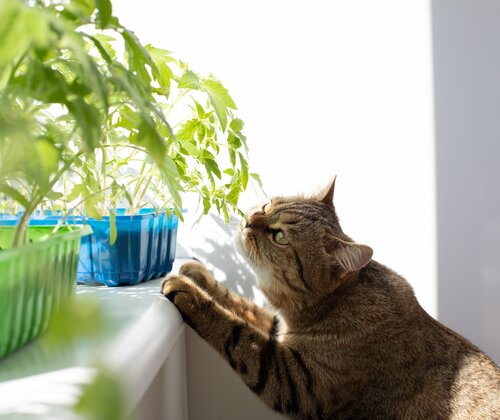
Garden & Plants
Multi-knowledge: Sowing seeds on the windowsill
The gardening season doesn't just begin in spring—it often starts in the middle of winter on the windowsill. While there is still snow outside, the first tender green shoots are already sprouting indoors. For many hobby gardeners, sowing seeds is one of the most enjoyable activities of the year. No wonder: home-grown plants are more robust, cheaper, and often more diverse than most young plants from the garden center.
When growing plants, high-quality sowing soil, EM ceramic powder, organic plant aids such as Roots and Plants, and the right sowing time play an important role. There are many professional tricks that experienced hobby gardeners use for this.
Beginner
7 minutes reading time
