Careers
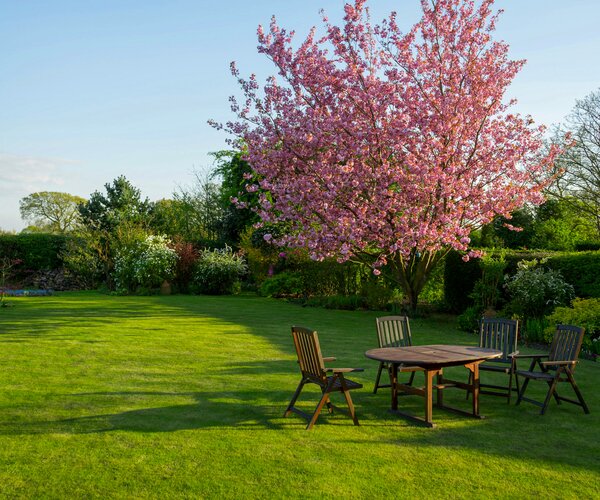
Multi-knowledge: Excellent lawn care—what matters most
A healthy, green lawn is not only a beautiful place to play and relax, but also an important design element. To keep it robust, soft, and a lush green, there are a few things to keep in mind. In this article, we give you practical tips for proper lawn care and show you how to get your garden in top shape for the long term!
Beginner
10 minutes reading time
Lawn care begins with choosing the location
A beautiful, well-maintained lawn needs a sunny and airy location. In very shady or permanently damp areas, most lawn grasses wither, moss and lawn fungi spread, and the turf becomes thin. A lively soil that can store water and nutrients well without forming waterlogging therefore creates ideal conditions for lush green grass.
Annual sanding also helps to ensure adequate aeration and nutrient supply on heavy soils. However, make sure you use a good mixture of one part quartz sand (grain size 0.2-2 mm) and one part weed-free mature compost. The best time to apply the sand-compost mixture at a rate of 2 to 5 liters per square meter is between mid-March and early May.
A beautiful, well-maintained lawn needs a sunny and airy location. In very shady or permanently damp areas, most lawn grasses wither, moss and lawn fungi spread, and the turf becomes thin. A lively soil that can store water and nutrients well without forming waterlogging therefore creates ideal conditions for lush green grass.
Annual sanding also helps to ensure adequate aeration and nutrient supply on heavy soils. However, make sure you use a good mixture of one part quartz sand (grain size 0.2-2 mm) and one part weed-free mature compost. The best time to apply the sand-compost mixture at a rate of 2 to 5 liters per square meter is between mid-March and early May.
Maintain your lawn by aerating and scarifying it
If the soil is compacted—for example, by heavy machinery—and the turf is very matted, the grass roots will not get any air. If your lawn looks tired and sluggish, it's high time to learn about proper lawn care! Lawn thatch and moss can be removed by scarifying or raking. The ideal time to scarify is after the second mowing of the year, as the turf is usually well established by this point. After this process, bare patches can be reseeded with fresh lawn seed. These measures promote healthy growth of your lawn and give it robustness and strength.
Mowing also needs to be learned
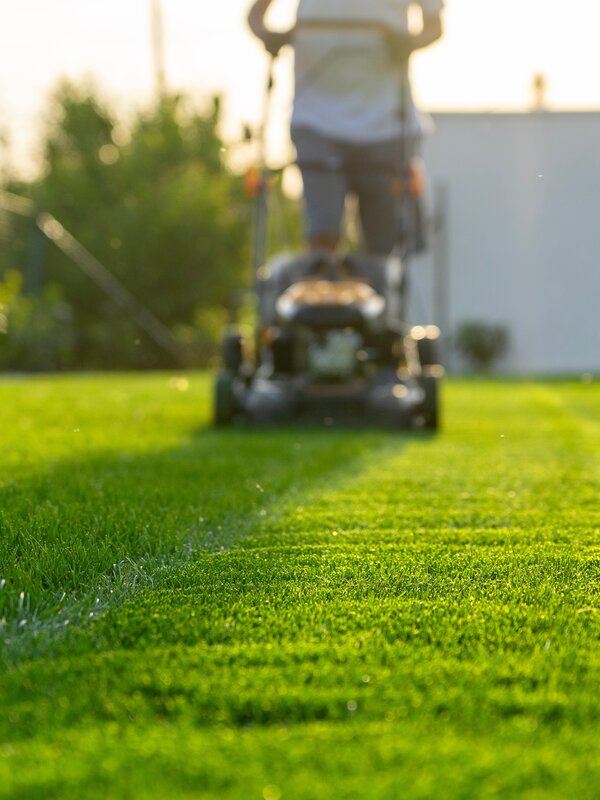
Regular and correct mowing is one of the most important basics for a strong and healthy turf:
- During the growing season, the lawn should be mowed about once a week. It is important not to set the cutting height too low, as grass that is cut too short is more susceptible to drought, disease, and weeds. A cutting height of about four to five centimeters has proven to be effective, as it protects the turf and promotes root growth.
- Sharp blades on the lawn mower are equally important, as blunt blades fray the blades of grass, which can lead to brown cut edges and a weakened appearance of the lawn.
- To avoid putting too much strain on the lawn, we recommend that you refrain from mowing in hot or dry weather.
The basic tip for lawn care: efficient watering
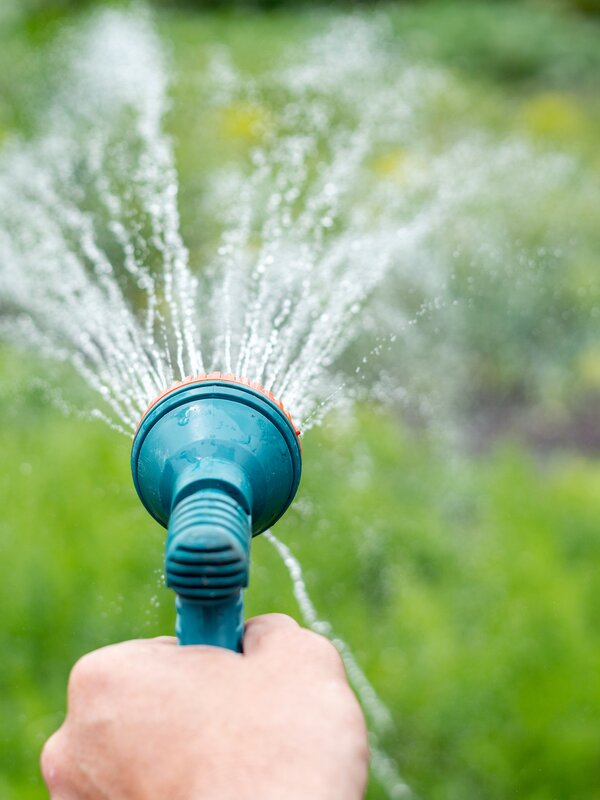
To prevent your lawn from being damaged, especially in the summer heat, it needs plenty of water. However, it is not only the amount that plays a decisive role; the type of watering is also essential for proper lawn care:
- We recommend watering less frequently but more thoroughly so that the water penetrates deeper into the soil.
- To prevent immediate evaporation, watering should be done early in the morning or late in the evening.
- For ecological and economic reasons, it is advisable to use rainwater instead of drinking water.
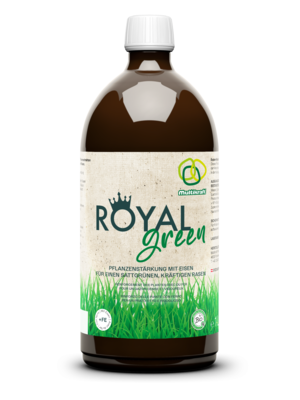
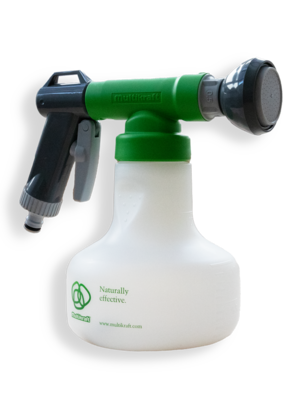
- To maintain the beautiful green color of your lawn and ensure a balanced supply of nutrients, we have developed Royal Green for you. This iron-containing product is particularly easy to apply with our Aquamix dispenser.
How to apply nutrients sustainably
Mineral fertilizers pollute the groundwater and can have a negative impact on soil life. It is therefore better to use organic fertilizers such as compost or special organic lawn fertilizers. These activate soil life, promote soil fertility and humus formation, and provide the soil with important nutrients in the long term. After all, healthy soil is the foundation for a vibrant lawn!
For an optimal supply of nutrients, the lawn should be fertilized two to three times a year. In spring and summer, nitrogen-rich fertilizer is important to promote growth. In fall, the fertilizer should have a higher potassium content so that the lawn is stronger going into winter.
Remove weeds mechanically
Many weeds that spread in lawns indicate the condition of the soil. Broad-leaved plantain and silverweed are more common on compacted soils, while creeping buttercup is more common on waterlogged soils. White clover, on the other hand, grows more abundantly on nutrient-poor soils. It binds nitrogen from the air in the soil with the help of so-called nodule bacteria. When the clover is mowed and mulched, this collected nitrogen is available to soil life and plants, thus contributing to improved soil fertility.
Good care, organic fertilization, and natural plant strengthening promote vigorous lawn grasses, resulting in a dense turf that naturally prevents the growth of unwanted weeds. It is advisable to avoid chemical agents, as these can damage the soil and disrupt the ecological balance. Unwanted weeds should be removed purely mechanically by weeding. This way, you can care for your lawn gently but efficiently!
An herb lawn as part of proper lawn care
A uniformly green garden can seem a little monotonous. To create a varied and natural garden, it makes sense to plant flower meadows or flower islands in addition to a classic lawn. These not only provide a visual balance to the uniform green, but are also a valuable habitat for numerous insects, thus promoting biodiversity in the garden. On a herb lawn, which is not fertilized and mowed less frequently, creeping bugle, brown knapweed, daisies, and other plants provide colorful splashes of color and a good deal of variety in the garden.
Many weeds that spread in lawns indicate the condition of the soil. Broad-leaved plantain and silverweed are more common on compacted soils, while creeping buttercup is more common on waterlogged soils. White clover, on the other hand, grows more abundantly on nutrient-poor soils. It binds nitrogen from the air in the soil with the help of so-called nodule bacteria. When the clover is mowed and mulched, this collected nitrogen is available to soil life and plants, thus contributing to improved soil fertility.
Good care, organic fertilization, and natural plant strengthening promote vigorous lawn grasses, resulting in a dense turf that naturally prevents the growth of unwanted weeds. It is advisable to avoid chemical agents, as these can damage the soil and disrupt the ecological balance. Unwanted weeds should be removed purely mechanically by weeding. This way, you can care for your lawn gently but efficiently!
An herb lawn as part of proper lawn care
A uniformly green garden can seem a little monotonous. To create a varied and natural garden, it makes sense to plant flower meadows or flower islands in addition to a classic lawn. These not only provide a visual balance to the uniform green, but are also a valuable habitat for numerous insects, thus promoting biodiversity in the garden. On a herb lawn, which is not fertilized and mowed less frequently, creeping bugle, brown knapweed, daisies, and other plants provide colorful splashes of color and a good deal of variety in the garden.
Conclusion
A lush green lawn can be maintained without the routine use of mineral fertilizers or pesticides. Organic fertilization, regular mowing, and supplementary natural plant strengthening with Royal Green can help support the vitality of your lawn. The basis for this is healthy soil with active soil life. Follow our lawn care tips and look forward to relaxing hours in your beautiful, healthy garden!
A lush green lawn can be maintained without the routine use of mineral fertilizers or pesticides. Organic fertilization, regular mowing, and supplementary natural plant strengthening with Royal Green can help support the vitality of your lawn. The basis for this is healthy soil with active soil life. Follow our lawn care tips and look forward to relaxing hours in your beautiful, healthy garden!
Making lawn care child's play
Multiknowledge – Barbara's effective tips for every home
Discover the best advice from our expert Barbara Enengel for a sustainable home and a flourishing garden in our blog series ‘Multiwissen - Barbaras effektive Tipps für jedes Zuhause’. Whether it's cleaning your home ecologically or transforming your garden into a blooming oasis, Barbara's tips will enrich your everyday life. Stay tuned for inspiring stories and smart life hacks! Barbara Enengel studied agriculture at the University of Natural Resources and Life Sciences in Vienna. She is interested in natural cycles and ecological relationships in nature and in the garden. She is particularly passionate about creating diverse and healthy living spaces for humans, animals and plants, a principle that she enthusiastically implements in her beautifully designed and ecologically managed garden.
This may also interest you …
Garden & Plants
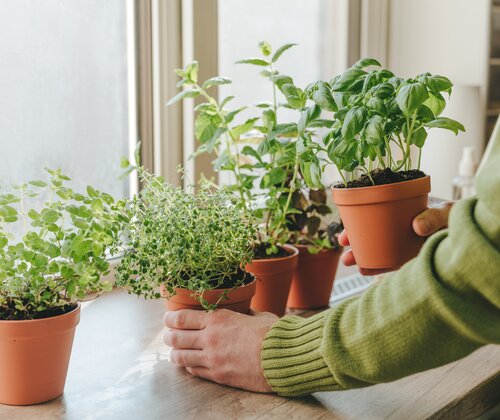
Multi-knowledge: Caring for indoor herbs in winter—how to keep basil, rosemary, and other herbs healthy
Indoor herbs bring fresh aroma and vibrant greenery to the kitchen. While they often grow vigorously in summer, winter poses particular challenges for them. Shorter days, dry heated air, and lower light intensity mean that many herbs soon become weak or even die shortly after purchase. However, with the right care, herbs can remain healthy and aromatic even in winter. This article presents practical measures that help indoor herbs survive the cold season vitality and vigor.
Beginner
7 minutes reading time
Garden & Plants
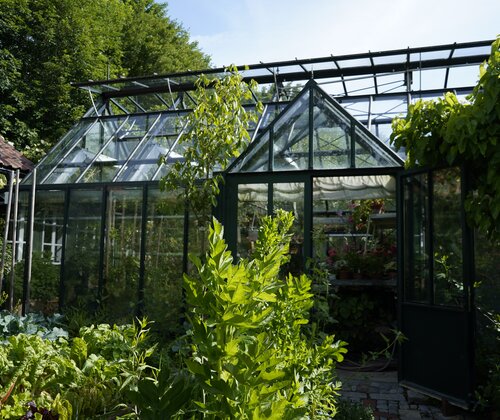
So it grows in the greenhouse: tips and tricks for optimal conditions
In einem Gewächshaus können Sie Pflanzen das ganze Jahr über in einer kontrollierten Umgebung kultivieren. Um das volle Potenzial auszuschöpfen, gibt es einige Dinge, die Sie beachten sollten. Mit diesen Tipps – einschließlich des Einsatzes effektiver Mikroorganismen nutzen Sie Ihr Gewächshaus optimal.
Enthusiast
4 minutes reading time

Pets
Multiknowledge: Natural pet care with EM – Probiotic for dogs & cats
Healthy from head to paw: Learn how Effective Microorganisms (EM) can contribute to coat care, hygiene, and general well-being as part of daily care—naturally and without traditional chemical additives. Discover practical applications for harmonious coexistence with your pet.
Beginner
5 minutes reading time
