Careers
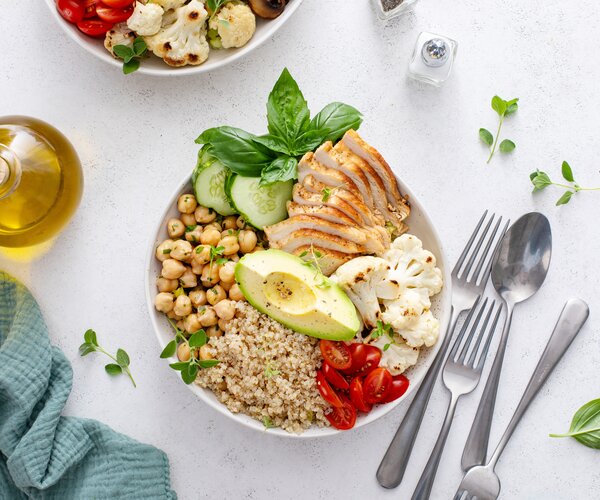
Land creates life: high-protein meals with regional foods
Shelves full of protein bars, drinks, and snacks in every flavor imaginable—the protein trend that is ubiquitous on social media has long since arrived in supermarkets. But even athletes can usually meet their daily protein requirements without special products: with regional foods that are less processed, provide high-quality and readily available protein, and at the same time strengthen local agriculture.
Beginner
5 minutes reading time
In order to stay physically fit and productive in the new year, we need, among other things, a sufficient protein intake. Protein serves as an important building block for muscle and tissue growth, supports regeneration, and contributes to muscle maintenance. So we should all make sure we consume enough protein—but how much do we really need?
In order to stay physically fit and productive in the new year, we need, among other things, a sufficient protein intake. Protein serves as an important building block for muscle and tissue growth, supports regeneration, and contributes to muscle maintenance. So we should all make sure we consume enough protein—but how much do we really need?
How high our protein requirements (really) are
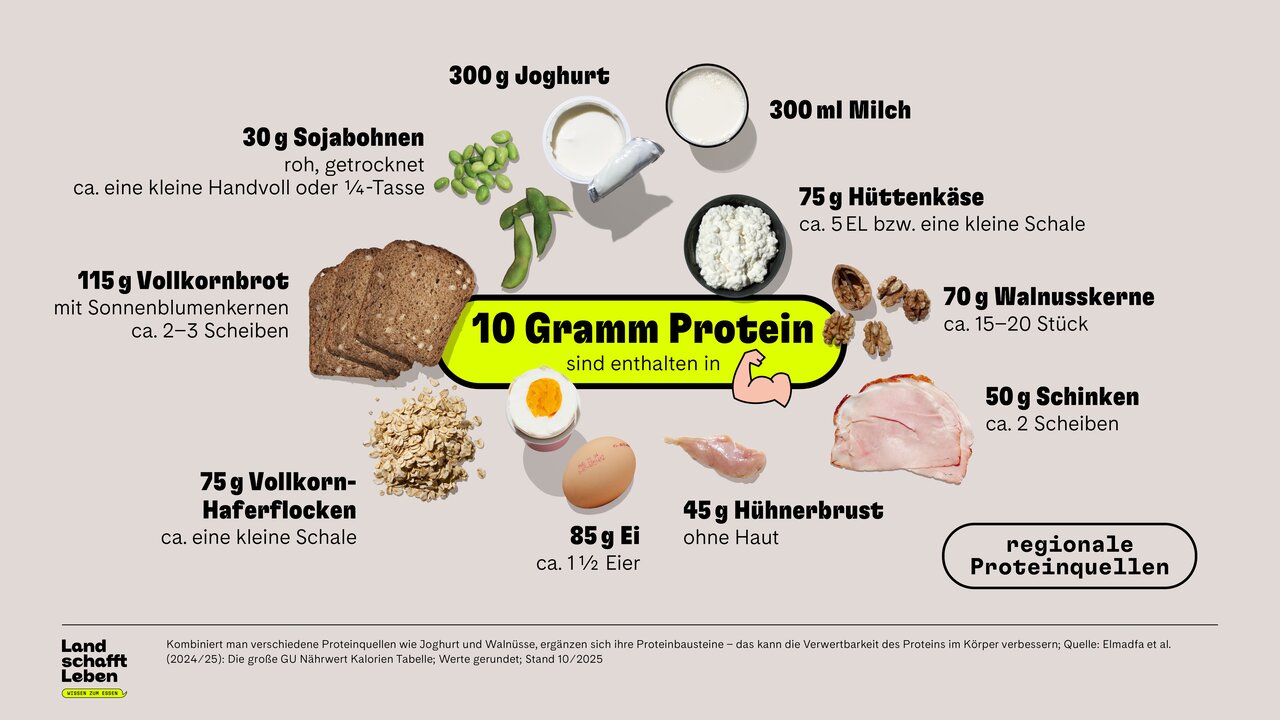
Adults should consume around 0.8 grams of protein per kilogram throughout the day, and those aged 65 and over should consume as much as 1 gram of protein per kilogram. So if you weigh 60 kilograms, you need 48 grams of protein per day. For example, 300 grams of yogurt, 15–20 walnuts, two to three slices of whole grain bread, 45 grams of chicken breast, or a small handful of soybeans provide about 10 grams of protein.
For particularly athletic individuals, sufficient protein is essential. For optimal adaptation to at least five hours of training per week, 1.2 to 2 grams of protein per kilogram of body weight should be consumed daily. For a body weight of 60 kilograms, that is between 72 and 120 grams of protein per day.
Tip: Animal protein sources, such as eggs, milk, and meat, are available to us all year round from local producers. Protein shakes, on the other hand, contain hardly any fiber, but often contain unnecessary additives. If natural foods are replaced by protein shakes, important nutrients are missing from the plate. In addition, the feeling of satiety that is supported by chewing and the intake of fiber is lost.
Tip: Animal protein sources, such as eggs, milk, and meat, are available to us all year round from local producers. Protein shakes, on the other hand, contain hardly any fiber, but often contain unnecessary additives. If natural foods are replaced by protein shakes, important nutrients are missing from the plate. In addition, the feeling of satiety that is supported by chewing and the intake of fiber is lost.
Boost your Protein!
When we combine different protein-rich foods, the body can utilize them even more effectively. Easily digestible protein from animal products combined with plant-based proteins spread across several meals throughout the day provides a real protein boost—for example, with potato hash browns and eggs, pancakes, or buckwheat salad.
When we combine different protein-rich foods, the body can utilize them even more effectively. Easily digestible protein from animal products combined with plant-based proteins spread across several meals throughout the day provides a real protein boost—for example, with potato hash browns and eggs, pancakes, or buckwheat salad.
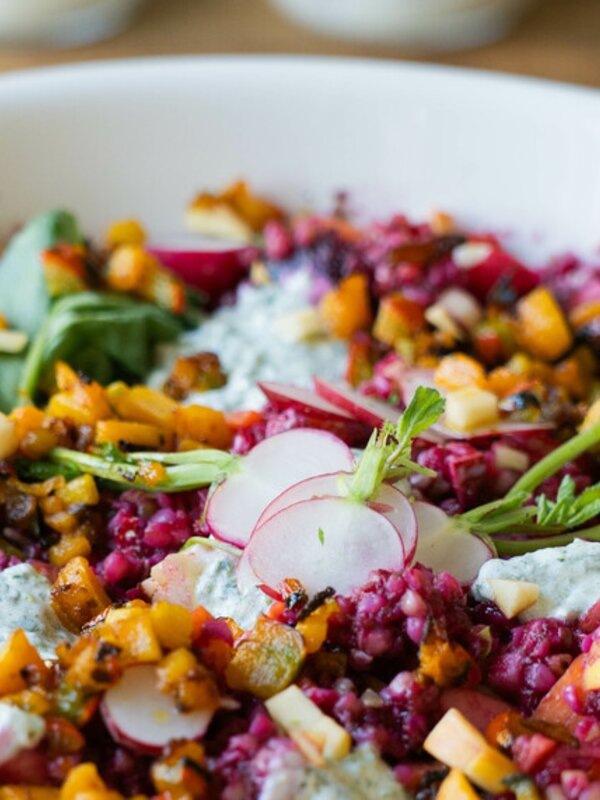
Tasty, protein-rich recipe: Buckwheat salad
Buckwheat is a local superfood: versatile, rich in protein, and perfect as a main ingredient in recipes. A fresh buckwheat salad can be prepared in just 25 minutes.
25 minutes | 4 servings | gluten-free
Ingredients:
- 250 g buckwheat rice
- 500 ml water/vegetable soup
- 2 red onions
- 2 cloves of garlic
- 200 g goat cheese
- Seasonal vegetables (here: beetroot, Hokkaido pumpkin, autumn radishes, etc.)
- Salt, pepper
For the herb dressing:
- 8 tbsp walnut/flaxseed oil
- 6 tbsp apple cider vinegar
- Juice of ½ organic lemon
- 1 tbsp mild mustard
- Herb salt, pepper
Preparation:
Bring the buckwheat rice to a boil in water or vegetable soup, reduce the heat, cover, and let soak for 15 minutes. Peel and finely chop the onion and garlic, chop the vegetables into small pieces, and crumble the goat cheese. Mix everything together with the buckwheat rice and season. For the dressing, blend all the ingredients with a hand blender until frothy and marinate the buckwheat salad with it before serving.
You can find more protein-rich recipes with buckwheat, such as stuffed buckwheat noodles or buckwheat granola, on the Land schafft Leben blog.
You are what you eat!
Our diet has a major impact on our well-being and plays a key role in our performance. Eating a balanced diet works extremely well with regional foods on your plate. Animal products in particular are available year-round from local producers and are a great source of high-quality protein. By consciously choosing Austrian products when doing your weekly shopping, you are not only improving your own health, but also supporting our agriculture in the long term.
Our diet has a major impact on our well-being and plays a key role in our performance. Eating a balanced diet works extremely well with regional foods on your plate. Animal products in particular are available year-round from local producers and are a great source of high-quality protein. By consciously choosing Austrian products when doing your weekly shopping, you are not only improving your own health, but also supporting our agriculture in the long term.
Land creates life: on the trail of Austrian food
For years, Multikraft has been a sponsor of the Land schafft Leben association, which raises awareness of the value of Austrian food—for producers, habitats, the environment, health, and for all of us. From the field and barn to the plate, along the entire value chain, researched transparently and independently—Land schafft Leben is the knowledge platform for Austrian food. Founders Maria Fanninger and Hannes Royer provide realistic insights, free of scandalization and whitewashing: as podcasts, on social media, in newsletters, in lectures, and in interviews. The scientifically based content, presented in text, image, and video form, is freely accessible at www.landschafftleben.at.
This may also interest you …
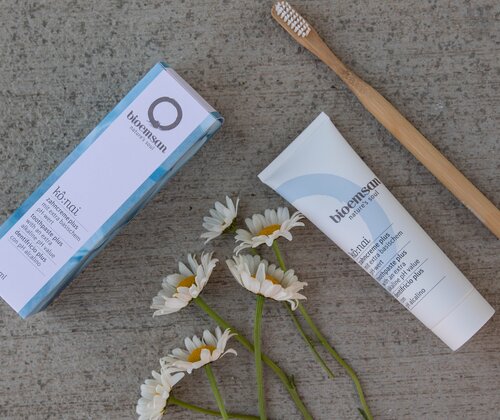
Fresh breath, healthy teeth: probiotic dental care with Bioemsan
A radiant smile starts not only with white teeth, but with a healthy mouth. Dental care is much more than just an aesthetic ritual – it is an important part of holistic health. More and more people are turning to natural dental care products that not only clean, but also support the oral flora. A special example: bioemsan toothpastes – natural dental care that combines modern oral hygiene with knowledge of the microbiome in the mouth.
Beginner
4 minutes reading time
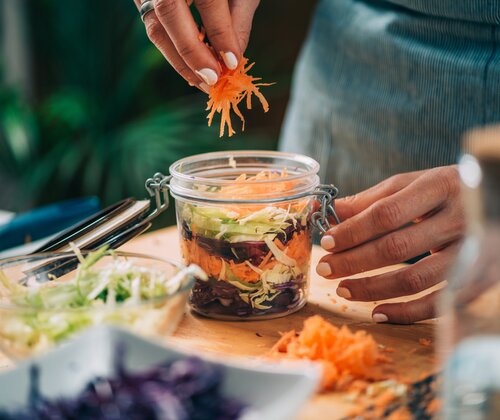
Multi-knowledge: Fermenting vegetables – simple and straightforward
Fermenting vegetables is becoming increasingly popular. No wonder – this traditional method not only preserves fresh vegetables for a long time, but also enhances their health benefits. Although the fermentation process may seem complex at first glance, it is quite easy to get started with just a few ingredients and a little patience.
Beginner
5 minutes reading time

Beginner
2 minutes reading time
