Careers
Multikosmos: Where the Lavender Blooms - A Story of Courage, Change, and the Power of Nature
Anyone who grows lavender knows that behind this plant’s apparent hardiness lies a delicate soul. Heat, humidity, stress—even minor factors are enough to sap the vitality from these fragrant purple wonders. For the van Adrichem family from Germany, lavender has long been more than just a product. They have been passionately cultivating ornamental plants for over 65 years. For them, lavender represents tradition, fragrance, summer—and the knowledge that nature and craftsmanship can exist in harmony. Our conversation with Mareike van Adrichem offers insight into the company’s history, its success, and how the team ultimately finds a natural solution even in challenging times.
Enthusiast
8 minutes reading time
For her, lavender symbolizes tradition, fragrance, and summer—and the knowledge that nature and craftsmanship can coexist in harmony. Our conversation with Mareike van Adrichem offers a glimpse into the company’s history, its success, and how the team ultimately finds a natural solution even in challenging times.
For her, lavender symbolizes tradition, fragrance, and summer—and the knowledge that nature and craftsmanship can coexist in harmony. Our conversation with Mareike van Adrichem offers a glimpse into the company’s history, its success, and how the team ultimately finds a natural solution even in challenging times.
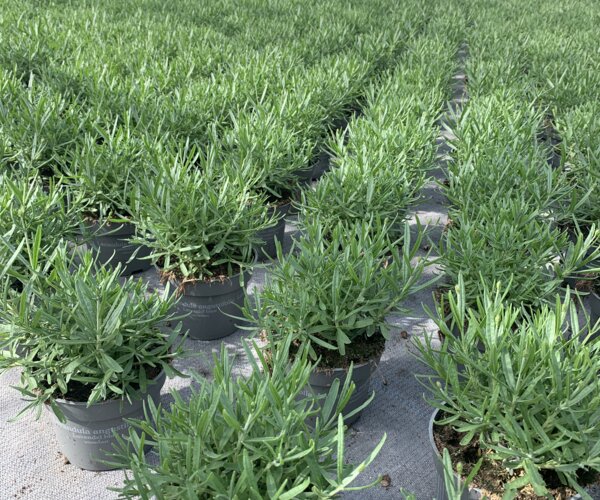
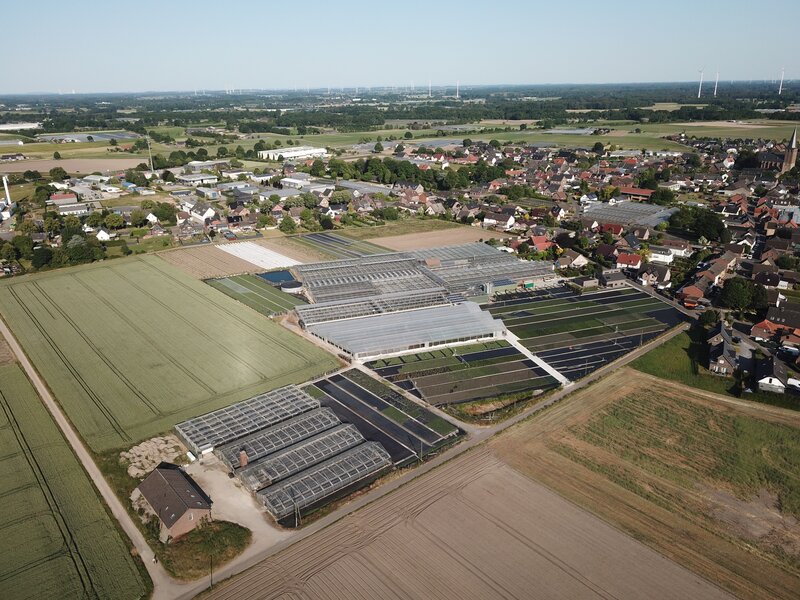
Managing Director Mareike van Adrichem, who took over the van Adrichem horticultural business from her parents in 2021, speaks proudly about the history of her family business. Her grandfather founded the company in 1958 as a vegetable farm. Back then, she explains, it was a big step when he added ornamental plants to the mix, but it was definitely worth it - and has been for generations. Just under 20 years after its founding, her parents, Toni and Gerda von Adrichem, took over the business and focused exclusively on azalea production for about a quarter of a century. That is, until 2002, when there was a major shift in crops with a strong focus on lavender cultivation. And with success: Since its founding, the business has grown from 2,000 square meters of cultivation area to a production area of 1.7 hectares in greenhouses and 1.7 hectares in open fields. On this land, with just five permanent employees, they produce nearly one million pots of various sizes and varieties. An achievement that requires good planning and smart decision-making.
Making the most of the situation
When watering their many plants, the van Adrichem family benefits greatly from one particular advantage: the natural slope of the terrain. Whenever possible, they make use of this for the flood irrigation method. Water flows into the rear section of the greenhouse, runs under the plants for about half an hour—depending on the crop—and is then collected again. The outdoor areas are watered entirely with a watering cart. This allows them to make optimal use of the conditions and keep the amount of work to a minimum.
When watering their many plants, the van Adrichem family benefits greatly from one particular advantage: the natural slope of the terrain. Whenever possible, they make use of this for the flood irrigation method. Water flows into the rear section of the greenhouse, runs under the plants for about half an hour—depending on the crop—and is then collected again. The outdoor areas are watered entirely with a watering cart. This allows them to make optimal use of the conditions and keep the amount of work to a minimum.
First problems: “A brown plant isn’t a healthy plant”
So business is going well and the team is well-coordinated. In 2023, however, a problem that had been recurring for several years came to a head: The lavender crops initially looked magnificent and healthy, but about two to three weeks before harvest, they “collapsed.” They turned brown for no apparent reason. And: “A brown plant is not a good plant,” says Mareike van Adrichem, describing the situation at the time, which put the business under significant pressure. The financial losses hit the family business hard. Time and again, the family considered possible causes such as root rot or leaf spot diseases. Various disinfection and plant protection measures were tried—but none of them yielded the desired results. Neither could the plants’ death be prevented, nor was there any sustained strengthening of the stock. Entire batches or varieties continued to fail unpredictably. This placed an increasing strain on the employees, and even the consultants who were brought in were ultimately left with a big question mark.
Long-term success with biostimulants
So Mareike van Adrichem set out to find an effective yet as natural a solution as possible. Avoiding chemical pesticides was important to her because, for one thing, none of them worked—neither to solve the existing problems nor to strengthen the plants—and, for another, she believes the future lies in reducing the use of chemical products. This is also a personal concern for her: “My daughter also runs around the farm every day, so it’s not always possible to say, ‘Please don’t walk through here’—that’s just difficult with small children. That’s one reason why I want to gradually phase out chemicals from our farm,” she explains. In her search, she eventually met Klaus Bongartz—one of Germany’s most sought-after horticultural experts, who advises farms across Europe. In his work, he recommends the Multikraft system as the foundation for healthy plant production because it has proven effective in many practical settings and has led to improvements. Mareike van Adrichem described her situation to him, and he advised her to consistently focus on strengthening the plants and the root zone. “He told us that it couldn’t hurt us or the plants to try it, and even if it didn’t work out, the costs wouldn’t be any worse than our losses,” the managing director recalls.
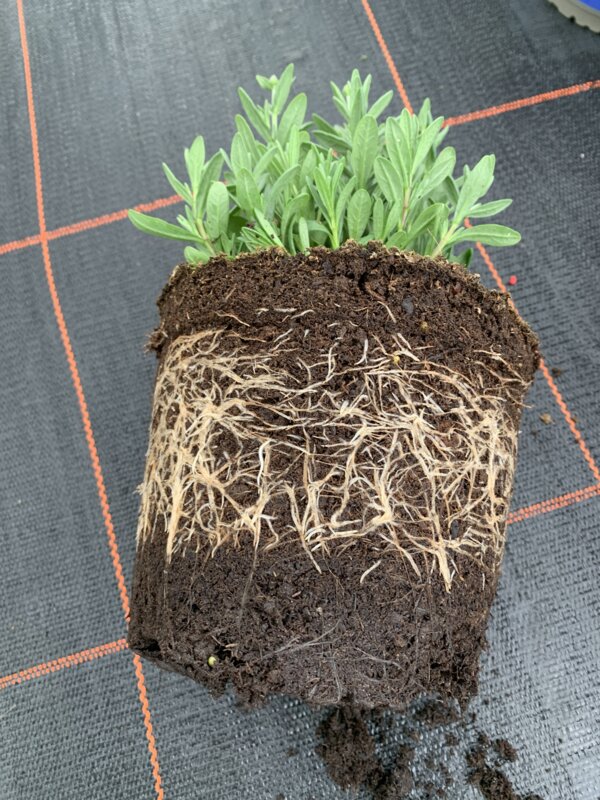
After brief consideration, the farm began watering the plants with 2 to 3 percent MK Start in the irrigation water to stabilize them and promote white root growth. At the same time, the farm started regular foliar spray applications using Multikraft products specifically designed for leaf application. The goal was to support the plants holistically, not only in the root zone but also through the leaves. The initial trial quickly became routine and has been in place for more than two years now. After just a short time, the farm’s employees noticed significantly more and stronger roots, and this was also reflected in the quality of the plants. A sigh of relief at the farm.
So Mareike van Adrichem set out to find an effective yet as natural a solution as possible. Avoiding chemical pesticides was important to her because, for one thing, none of them worked—neither to solve the existing problems nor to strengthen the plants—and, for another, she believes the future lies in reducing the use of chemical products. This is also a personal concern for her: “My daughter also runs around the farm every day, so it’s not always possible to say, ‘Please don’t walk through here’—that’s just difficult with small children. That’s one reason why I want to gradually phase out chemicals from our farm,” she explains. In her search, she eventually met Klaus Bongartz—one of Germany’s most sought-after horticultural experts, who advises farms across Europe. In his work, he recommends the Multikraft system as the foundation for healthy plant production because it has proven effective in many practical settings and has led to improvements. Mareike van Adrichem described her situation to him, and he advised her to consistently focus on strengthening the plants and the root zone. “He told us that it couldn’t hurt us or the plants to try it, and even if it didn’t work out, the costs wouldn’t be any worse than our losses,” the managing director recalls.
After brief consideration, the farm began watering the plants with 2 to 3 percent MK Start in the irrigation water to stabilize them and promote white root growth. At the same time, the farm started regular foliar spray applications using Multikraft products specifically designed for leaf application. The goal was to support the plants holistically, not only in the root zone but also through the leaves. The initial trial quickly became routine and has been in place for more than two years now. After just a short time, the farm’s employees noticed significantly more and stronger roots, and this was also reflected in the quality of the plants. A sigh of relief at the farm.
An investment that pays off
The results were so convincing that the family expanded the application to their other crops. “I wanted to play it safe and not have any more brown plants. I’d rather do one more treatment and end up with really good, strong roots,” says Mareike van Adrichem. Over time, the application process was further simplified and, on the recommendation of Multikraft’s advisory team, supplemented with misting. Thanks to an existing fogger, large-scale treatment was initially possible without additional labor. The farm has since invested in a new device. “On average, an employee spends about eight hours a week on plant protection measures. If you offset these costs against the 5,500 euros for the new device, it’s a simple calculation—the investment pays for itself in one to one and a half years,” explains the managing director. And time is money, too: She sees another advantage of fogging in the fact that the device runs at night and, unlike conventional methods, can be scheduled to run once a week or daily during the season.
Navigating Crises with Flying Colors
Problems with browning plants are now rare at the van Adrichem nursery. The stock is stable and production is reliable. This made the situation in 2024 all the more drastic, when a severe hailstorm damaged an entire field of young plants and threatened to ruin the crop. For the family-owned business, secure production is essential- the core team is tightly knit and takes responsibility for one another. The relief was correspondingly great when the affected plants recovered quickly after treatment with MK Start and showed renewed vitality. Such experiences confirm the path they have chosen: to observe closely, act together, and rely on long-term, proven solutions even in challenging moments.
Problems with browning plants are now rare at the van Adrichem nursery. The stock is stable and production is reliable. This made the situation in 2024 all the more drastic, when a severe hailstorm damaged an entire field of young plants and threatened to ruin the crop. For the family-owned business, secure production is essential- the core team is tightly knit and takes responsibility for one another. The relief was correspondingly great when the affected plants recovered quickly after treatment with MK Start and showed renewed vitality. Such experiences confirm the path they have chosen: to observe closely, act together, and rely on long-term, proven solutions even in challenging moments.
This may also interest you …

Beginner
3 minutes reading time
Enthusiast
3 minutes reading time
livestock farming
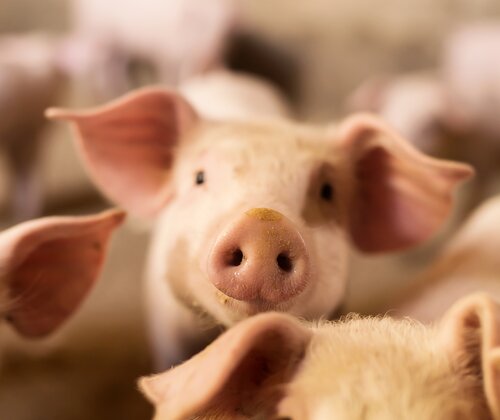
Better feed quality, healthier pigs: a farmer breaks new ground
Marcus Fattinger has overcome a crucial challenge at his Upper Austrian breeding farm: the rapid spoilage of feed. By using Fermented Herbal Extract (FHE), he has not only improved feed preservation but also the health of his pigs.
Enthusiast
4 minutes reading time
